
PMP® Application Professional Experience: What Changed and What Applicants Need to Know
A practical comparison of the previous and current Professional Experience forms, based on forms observed on 9 July 2026. What changed, what each field now asks for, and how to write a strong role, contributions and outcomes summary.
While supporting a PMP® aspirant on 9 July 2026, I noticed a significant change — not only in the form's appearance, but in how experience is entered.
The previous form asked for detailed project information across several separate fields. The new form is shorter and more streamlined.
What changed?
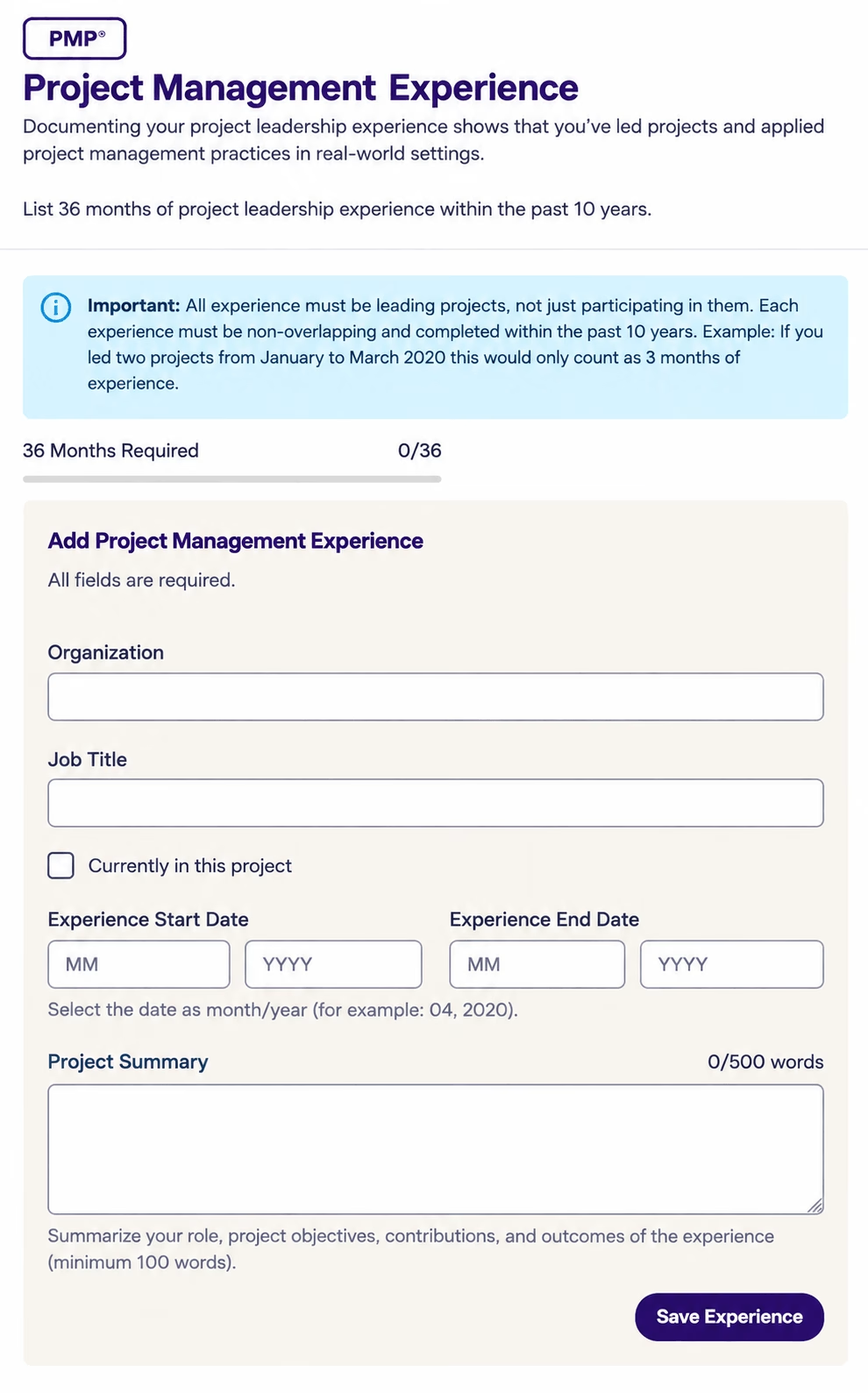
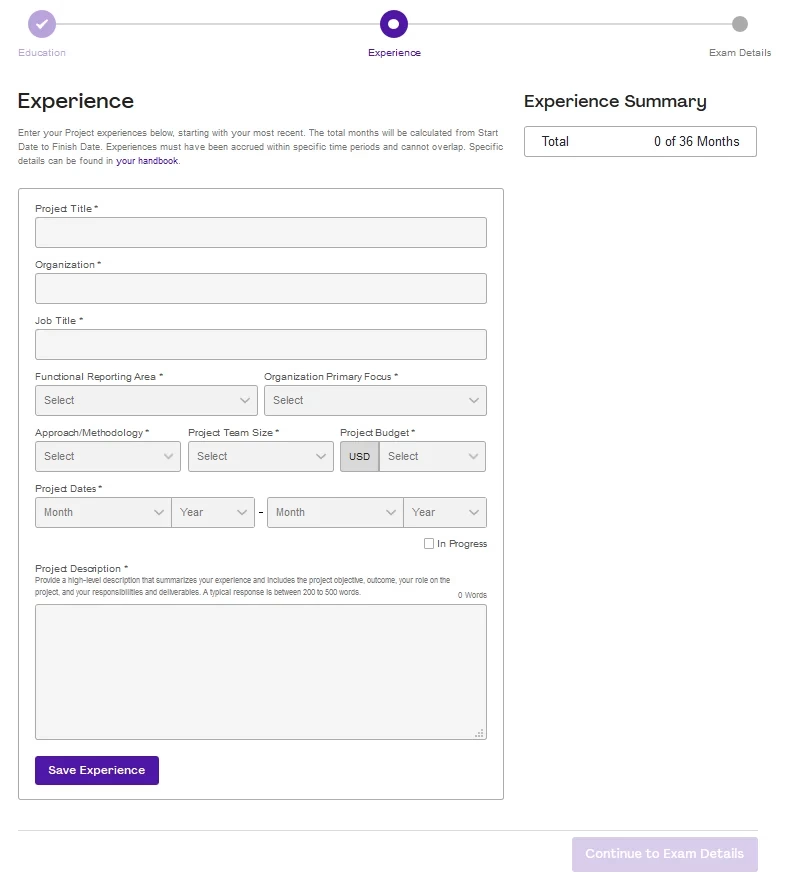
The screenshots below show the most visible differences between the previous and current Professional Experience forms.
 🔍 Click to enlarge
 🔍 Click to enlarge
Professional Experience form: previous vs current
| Field | Previous form | Current form |
|---|---|---|
| Project Title | Required | Removed |
| Organization | Required | Required |
| Job Title | Required | Required |
| Functional Reporting Area | Required | Removed |
| Organization Primary Focus | Required | Removed |
| Approach / Methodology | Required | Removed |
| Project Team Size | Required | Removed |
| Project Budget | Required | Removed |
| Project / Experience Dates | Required (start–finish, non-overlapping) | Required (start–end, non-overlapping) |
| “Currently in this role” option | Not present | Available |
| Description / Summary | Project Description (200–500 words: objective, outcome, role, responsibilities, deliverables) | Role Summary (100–500 words: role, contributions, outcomes) |
| Total experience required | 36 months, non-overlapping, within past 10 years | 36 months, non-overlapping, within past 10 years |
What aspirants should note, field by field
Here is what each field on the current Professional Experience form is actually asking for.
Organization
Enter the name of the organization where you gained the project experience.
Job Title
Enter your actual job title. It does not have to be “Project Manager”: it may be Project Engineer, Site Engineer, Construction Manager, Planning Engineer, Project Coordinator, Technical Manager, Design Manager, Operations Manager, IT Manager, Business Analyst, Team Leader, Department Manager, Consultant or another relevant position.
What matters is not the title, but whether your experience shows you led and managed the project.
Experience Dates
Enter the start and end dates of the relevant project experience you are claiming. These dates should reflect the actual project period, not automatically your full period of employment with the organization.
If one project does not give you enough qualifying months, you can add other projects until you meet the required duration:
- 5 years of experience for diploma holders
- 3 years of experience for bachelor's, master's or doctoral degree holders
These projects do not need to be from the same organization. They can include projects with previous employers, as long as the experience was gained within the past 10 years.
If you hold a bachelor's degree and one project at your current organization gives you at least 36 months of qualifying experience, that project alone is enough. You don't need to add more.
You can enter overlapping project periods, but the overlapping months are not counted twice, so it is better to report the longest one. Any project from the last 10 years can be reported, though I always suggest choosing the most recent. The form does not ask for the project name here, only the start and end dates.
Experience Summary
The previous form asked you to describe the project objective, your leadership role and the key deliverables across the life cycle, from initiating through closing, including the outcome.
The new form asks for only three areas: your role, your contributions and the project outcomes. The format is shorter, but your summary must still give convincing evidence that you led and managed a project. It should show project leadership, not just technical duties, routine operations or a general job description.
Writing your role, contributions and outcomes
Your role
Describe your position within the project and the leadership responsibilities you held. Explain your level of authority, accountability and involvement in decision-making. Show how you led and coordinated activities across these three areas:
How you guided team members, managed stakeholders, resolved conflicts, set expectations and supported collaboration.
How you planned, executed, monitored, controlled and closed the work while managing risks, issues, changes, quality, schedule and budget.
How you kept the project aligned with organizational objectives, delivered business value, met compliance requirements and responded to change.
Your contributions
Describe what you personally led, planned, managed, coordinated, monitored, resolved or delivered. Focus on your own actions and responsibilities, not only the work done by the organization or the project team.
“The project delivered a new ERP system for the organization.”
“I identified key stakeholders, helped define the project objectives and requirements, developed and monitored the implementation plan, coordinated the technical and operational teams, managed risks and change requests, resolved issues affecting the schedule, oversaw user testing and training, and coordinated final acceptance and project closure.”
The outcomes
Explain what the project achieved through your involvement and how the results benefited the end user, customer or organization: improvements, benefits or measurable results. State whether the objectives and requirements were met within the approved scope, budget, schedule and quality expectations. If the project is ongoing, describe the results so far and the expected outcomes.
Need help reviewing your PMP® application?
A well-prepared application helps you avoid unnecessary confusion, delays or possible rejection. Professional guidance can help you:
- Identify the correct qualifying project periods
- Organize multiple projects properly
- Avoid double-counting overlapping months
- Write a clear summary of your role, contributions and outcomes
- Review the application before submission
Before you submit, make sure your experience is presented clearly, accurately and in line with what the new form asks for.
3FOLD Training supports you beyond the training
At 3FOLD Training FZE, we help our students with their PMP® exam application, including:
- Reviewing eligibility and experience periods
- Guiding the correct presentation of project experience
- Helping organize multiple project entries
- Reviewing the role, contributions and outcomes summary
- Supporting application submission and audit preparation
Our goal is not only to prepare you for the PMP® exam, but to guide you through the application process with more confidence and clarity.
PMP® application Professional Experience: frequently asked questions
What changed in the PMP® application Professional Experience section in 2026?
Based on forms observed on 9 July 2026, the PMP® application Professional Experience section is shorter. It now asks for Organization, Job Title, Experience Start and End Dates, and a Role Summary of 100 to 500 words covering your role, contributions and outcomes. The 36-month, non-overlapping, 10-year experience rule has not changed.
Which fields were removed from the PMP® application Professional Experience form?
Six fields were removed from the PMP® application Professional Experience form: Project Title, Functional Reporting Area, Organization Primary Focus, Approach or Methodology, Project Team Size and Project Budget. The old Project Description has been replaced by a shorter Role Summary.
Should I enter my full employment period as the dates in the PMP® application Professional Experience section?
No. The dates in the PMP® application Professional Experience section should reflect the actual project period you are claiming, not automatically your full employment period. If you worked somewhere for five years but led a qualifying project for eight months, the five years should not be treated as five years of project leadership experience.
Does my job title need to be Project Manager for the PMP® application Professional Experience section?
No. For the PMP® application Professional Experience section you enter your actual job title, such as Project Engineer, Site Engineer, Planning Engineer, Project Coordinator, IT Manager, Business Analyst or Consultant. What matters is whether your experience shows that you led and managed the project, not the title itself.
What should the Role Summary in the PMP® application Professional Experience section include?
The Role Summary in the PMP® application Professional Experience section should cover three areas: your role, your contributions and the project outcomes. It must show project leadership across people, process and the business environment, rather than repeating a general job description or listing routine technical duties.
How many words is the Role Summary in the PMP® application Professional Experience section?
The Role Summary in the current PMP® application Professional Experience section requires a minimum of 100 words and allows a maximum of 500 words. The previous form's Project Description required 200 to 500 words.
How many months of project experience do I need for the PMP® application?
For the PMP® application, bachelor's, master's or doctoral degree holders need 36 months of non-overlapping project experience, and diploma holders need 60 months, gained within the past 10 years. Always confirm current eligibility requirements on PMI.org before applying.
Can I add more than one project in the PMP® application Professional Experience section?
Yes. If one project does not give you enough qualifying months, you can add more projects in the PMP® application Professional Experience section until you meet the required duration. The projects can be from different employers, as long as the experience was gained within the past 10 years.
Are overlapping projects counted twice in the PMP® application Professional Experience section?
No. You can enter overlapping project periods in the PMP® application Professional Experience section, but the overlapping months are not counted twice. It is usually better to report the longest project for that period.
Can 3FOLD Training help review my PMP® application Professional Experience section?
Yes. 3FOLD Training helps its PMP® students review eligibility and experience periods, organize multiple project entries, review the role, contributions and outcomes summary, and prepare for application submission and audit.
Planning to enroll in PMP® Exam Preparation? See the upcoming batch and what the course includes.




Leave a Reply
Your email is safe with us.