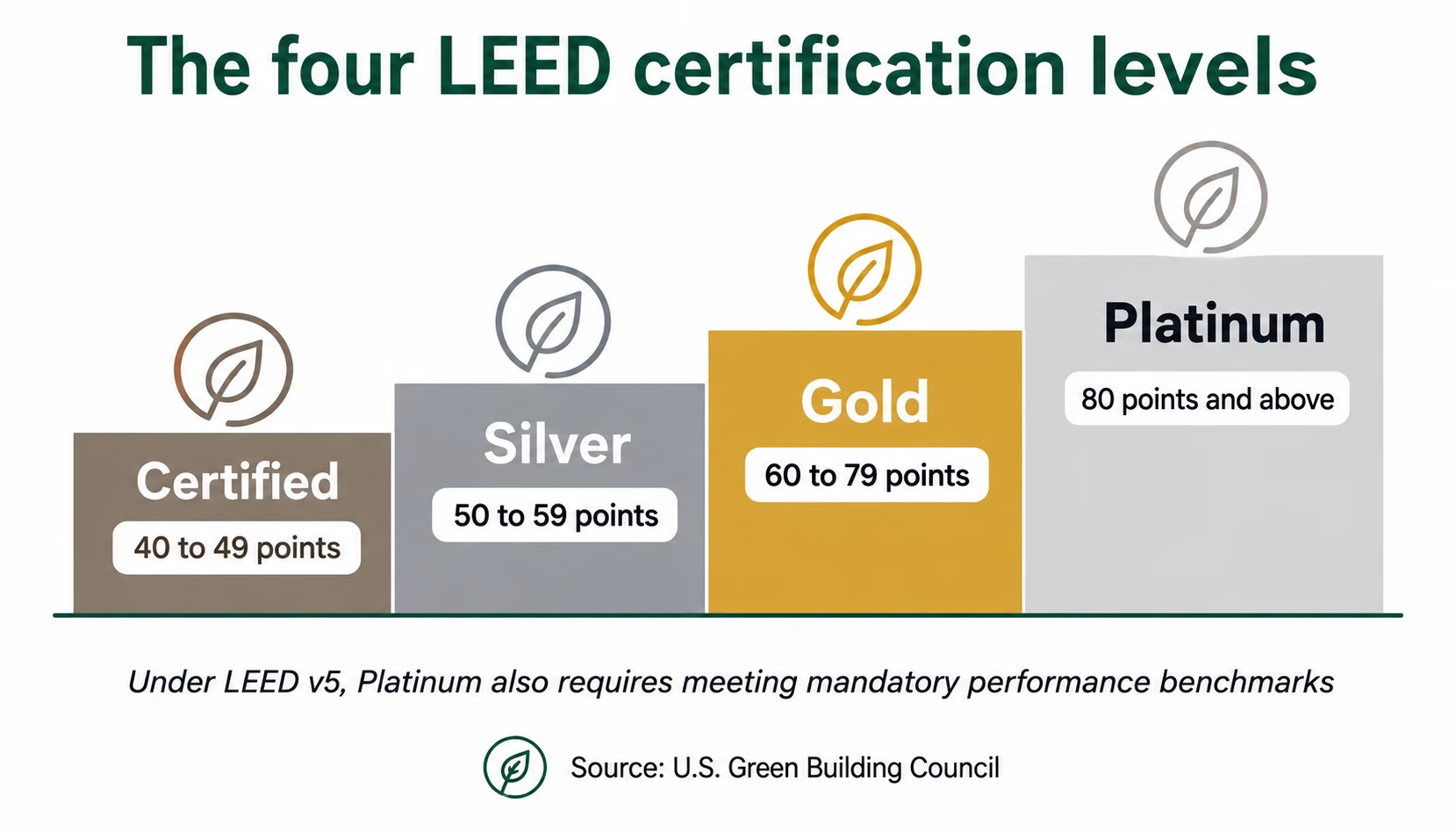
There are four LEED certification levels, awarded to a building project based on the number of points it earns against the LEED rating system: Certified, Silver, Gold and Platinum. The more points a project achieves across categories like energy, water, materials and indoor environmental quality, the higher its certification level.
| Certification level | Points required |
| Certified | 40–49 points |
| Silver | 50–59 points |
| Gold | 60–79 points |
| Platinum | 80+ points |

USGBC
The U.S. Green Building Council (USGBC) is a non-profit organization with the purpose to transform the built environment to create prosperous, healthy, and resilient communities.
LEED is the world’s most commonly used and acknowledged green building grading system today. From new construction and interior fit-outs to sustainable operations and maintenance upgrades, LEED certification is now used for almost all buildings (commercial or residential) and project types. It has been applied to more than 100,000 commercial projects across over 180 countries and territories.
Where do the points come from?
A project earns points by meeting credits grouped into impact categories. Under LEED v5 — the current rating system, launched on 28 April 2025 — those categories are weighted as follows:
- Decarbonization — about half of all available points, covering operational and embodied carbon, refrigerants and transportation
- Quality of Life — about a quarter, covering occupant health, wellbeing and community impact
- Ecological Conservation & Restoration — about a quarter, covering ecosystems, biodiversity, water and land
Every LEED v5 project must also complete carbon and climate-risk assessments — these are mandatory, not optional credits. A fuller explanation of the rating system is in what is LEED.
What changed for Platinum under LEED v5
Reaching 80 points is no longer sufficient on its own. Under LEED v5, Platinum carries additional mandatory performance benchmarks covering full electrification, renewable energy, high efficiency and low embodied carbon. In practice this makes Platinum a meaningfully harder target than it was under v4 — worth knowing if you are advising a project team on which level to aim for.
Certification levels vs credential levels — not the same thing
These two are constantly confused, so it is worth stating plainly: buildings get certification levels (Certified, Silver, Gold, Platinum), while people get credentials. The professional credentials are:
1.LEED Green Associate (LEED GA)
2.LEED Accredited Professional (LEED AP)
LEED GA is the first of the two LEED credentials and the first step to becoming a certified LEED professional. It is mandatory to be LEED GA certified in order to become a certified LEED Accredited Professional, unless you take the combined LEED GA and LEED AP exam, where the prerequisite is waived. LEED Green associate is a foundational certification in which you can learn about LEED rating systems’ basic framework. Anyone who has basic knowledge regarding the LEED rating system and those who are into green building projects can acquire the LEED Green Associate certification.
Being the highest of them two credentials, the LEED AP has five different specialties. You can choose your specialty according to your profession. The five different LEED AP specialties offered by the United States Green Building Council (USGBC) are as follows:
1.LEED AP BD+C (Building Design + Construction)
2.LEED AP ID+C (Interior Design + Construction)
3.LEED AP O+M (Operations + Maintenance)
4.LEED AP ND (Neighborhood Development)
5.LEED AP Homes
For the full breakdown of each credential — eligibility, exam format and how continuing education works — see the types of LEED accreditation and the difference between LEED GA and LEED AP.
Frequently asked questions
How many points do you need for LEED Gold?
60 to 79 points.
What is the highest LEED certification level?
Platinum, at 80 points or more. Under LEED v5 it also requires meeting mandatory performance benchmarks on electrification, renewables, efficiency and embodied carbon.
Is there a level below Certified?
No. A project scoring under 40 points does not achieve LEED certification.
Do the certification levels apply to people?
No. Individuals hold credentials — LEED Green Associate or LEED AP with a specialty — not certification levels.
LEED Certification Training in 3FOLD
Get excellent training from a LEED expert for both the LEED credentials from 3FOLD TRAINING. We deliver LEED Green Associate training and LEED AP BD+C training with the Building Design and Construction specialty, both aligned to LEED v5. More than 30,000 professionals across over 100 countries have prepared with us since 2008. Enrolling in 3FOLD TRAINING will give you access to world-class resources, the opportunity to connect with other professionals from around the world, quality training from an experienced and certified trainer, and access to free webinars that will help you continue to excel in your career.
Without further delay, contact us to know more about the upcoming schedule, enroll, prepare and become LEED certified, or take both credentials together on the LEED GA and AP BD+C combo course.





8 Comments
Leave your reply.