
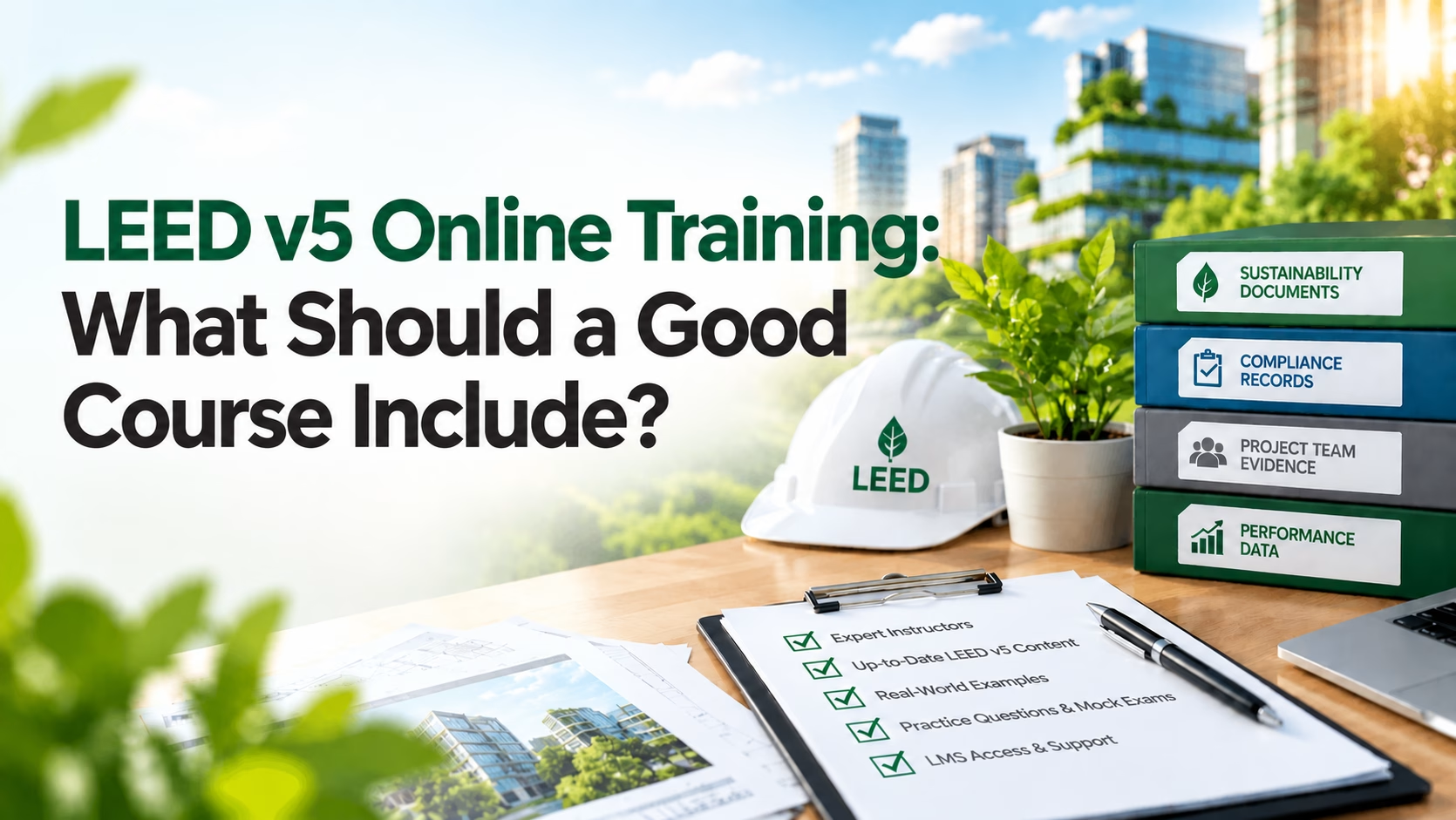
LEED v5 Online Training: What Should a Good Course Include?
Not all LEED v5 online training is built the same way. Some courses are little more than a recorded slideshow of the reference guide. Others are built around live instruction, structured practice and real support. Before you enroll in anything, it's worth knowing exactly what a genuinely good LEED v5 online training course should include.
Why "Online Training" Isn't a Single Thing
"Online training" can describe two very different experiences. It can mean a live, structured course delivered by an instructor, with practice, feedback and support built in. Or it can mean a static set of slides and a PDF, labeled as a course but offering little more than unguided reading.
With LEED v5 specifically, this distinction matters even more. The rating system has evolved, and course content that hasn't been updated to reflect the current v5 framework can leave candidates studying material that no longer matches what the exam actually covers.
1. Alignment With the Current LEED v5 Syllabus
The first and most basic requirement of a good LEED v5 online course is that it's actually built around LEED v5, not a v4 or v4.1 course with a new label attached.
LEED v5 reflects updates to credits, categories and priorities compared to earlier versions. A course still teaching the older structure can leave gaps in exactly the areas the current exam is most likely to test.
2. Instructor-Led Sessions, Not Just Recorded Slides
A course built entirely around pre-recorded, static content has no way to answer a question, adapt to where candidates are struggling, or explain a concept a second way when the first explanation didn't land.
Live, instructor-led sessions solve this. Candidates can ask questions in real time, and the instructor can adjust pacing or emphasis based on where the group actually needs help, something a fixed recording simply can't do.
3. A Structured Preparation Path
Good online training doesn't just hand candidates a pile of material and leave them to sequence it themselves. It lays out a clear path: what to study first, how topics build on one another, and how much time to spend on each section.
Logical Sequencing
Categories and credits introduced in an order that builds understanding, rather than jumping between unrelated topics.
A Defined Timeline
A course length and session cadence candidates can plan around, rather than an open-ended, self-paced pile of content.
Milestones Along the Way
Checkpoints, such as practice quizzes after each section, that confirm understanding before moving forward.
A Clear End Point
A defined point at which the course content is complete and the candidate moves into focused exam-readiness review.
4. LMS Access for Organized, Flexible Study
A learning management system gives candidates a single, organized place to access course content, materials and recordings, rather than scattered files sent over email or a course that only exists during live sessions.
This matters particularly for working professionals, who need to revisit material outside of scheduled sessions and study around a variable work schedule.
5. Practice Questions Aligned to v5
Practice questions are only useful if they reflect the current exam. Outdated practice questions, written for an earlier version of LEED, can train candidates toward the wrong answers or the wrong emphasis entirely.
Good practice questions should mirror the scenario-based style of the actual exam, testing applied understanding of v5 concepts rather than simple recall.
6. Full-Length Mock Exams
Beyond individual practice questions, a good course should include at least one full-length, timed mock exam that simulates the real exam experience, both in content and in pacing.
This gives candidates a realistic sense of their readiness before exam day, rather than a vague sense of "I think I understand this" based on reading alone.
7. Ongoing Trainer Support
A good course doesn't end the moment live sessions finish. Candidates often have questions while reviewing on their own, and being able to reach a trainer for clarification, rather than being left to figure it out alone, can make a meaningful difference.
- The ability to ask a trainer a question outside of scheduled sessions
- Access to instructors who understand the current v5 framework in depth
- A response time that fits within a candidate's actual study timeline
8. Updated, Version-Correct Study Material
Study materials, notes, summaries and guides, should be written specifically for LEED v5, not repurposed from older content with minimal changes.
This is one of the easiest things for candidates to check directly. Ask to see a sample of the study material and confirm it references current v5 terminology, categories and credit structures.
9. Clear GA and AP Pathways
LEED Green Associate and LEED AP serve different purposes and different candidates. A good training provider should be clear about which pathway a given course prepares you for, and how the two relate to one another.
| Pathway | What It's Generally For |
|---|---|
| LEED Green Associate | A foundational credential covering general LEED knowledge, often a starting point for candidates newer to green building. |
| LEED AP (with specialty) | A more advanced credential requiring deeper, specialty-specific knowledge, typically pursued by candidates with more direct project experience. |
A good course should be explicit about which exam its content is built for, and should not blur the two together as if identical preparation works for both.
10. Quick Evaluation Checklist
Before enrolling in any LEED v5 online training course, it's worth running through a short checklist.
11. What 3FOLD Training's LEED v5 Program Provides
3FOLD Training's LEED v5 online program is built around the checklist above, rather than around the minimum needed to call something a "course."
Current LEED v5 Curriculum
Course content built specifically for the LEED v5 framework, covering both the LEED Green Associate and LEED AP pathways.
Live Instructor-Led Sessions
Real-time teaching with the ability to ask questions and get clarification directly, rather than working through static recordings alone.
Structured Preparation & LMS Access
A defined path through the syllabus, with all materials, recordings and resources organized in one accessible platform.
Practice Questions, Mock Exams & Trainer Support
Applied practice aligned to current v5 content, full-length mock exams, and ongoing access to trainers for questions along the way.
Visit 3FOLD Training's LEED Green Associate & LEED AP page to see current program details for both pathways.
Key Takeaways
Frequently Asked Questions About LEED v5 Online Training
What makes LEED v5 online training different from earlier LEED training?
LEED v5 online training is built around the current LEED v5 framework, including its updated categories and credit structures. Course content, practice questions and study materials should all reflect this current version rather than older v4 or v4.1 content.
Is live instruction necessary for LEED v5 online training, or are recordings enough?
Live instruction offers real-time question and answer support that recordings alone can't provide. Some candidates do well with recorded content, but live sessions generally allow difficult topics to be clarified more directly.
Does a good LEED v5 course cover both LEED Green Associate and LEED AP?
It depends on the provider. Some courses are built specifically for LEED Green Associate, others for LEED AP, and some offer both pathways. A good provider should be clear about which pathway a given course prepares you for.
Why does LMS access matter for LEED v5 online training?
An LMS keeps course materials, recordings and resources organized in one place, allowing candidates to study flexibly between live sessions rather than relying only on scheduled class time.
Are practice questions and mock exams included in most LEED v5 courses?
This varies by provider. Candidates should confirm that a course includes practice questions aligned to current v5 content and at least one full-length, timed mock exam before enrolling.
Does USGBC recognize online training as part of LEED exam preparation?
USGBC treats structured online courses and study resources as a recognized part of LEED credential preparation. However, USGBC does not vet or guarantee the quality of individual third-party training providers, so evaluating a course's content and structure remains the candidate's responsibility.
What does 3FOLD Training's LEED v5 program include?
3FOLD Training's LEED v5 program includes a current v5 curriculum, live instructor-led sessions, structured preparation with LMS access, practice questions, full-length mock exams and ongoing trainer support, for both the LEED Green Associate and LEED AP pathways.
Choosing LEED v5 Online Training Shouldn't Be a Guessing Game
Current v5 content, live instruction, structured preparation, LMS access, applied practice and real trainer support, that's what separates a genuinely useful course from a passive collection of slides. Know what to look for before you enroll.
📞 +971 4 577 6146 | +971 50 481 9989



Leave a Reply
Your email is safe with us.