LEED Certification:
LEED certification is awarded to building projects by the United States Green Building Council (USGBC), while individuals earn LEED credentials through GBCI. A building that meets or exceeds LEED standards is typically cheaper to run and produces less waste. Features that improve indoor air quality and increase natural light make tenants more satisfied and easier to retain — while buildings with poor environmental standards tend to see higher tenant turnover. How can a LEED Professional contribute to great and sustainable buildings? Why is LEED Certification important? Why become a certified LEED Professional? Find out in this article.
LEED GA and AP:
The LEED Green Associate certification is a foundational professional credential that affirms the holder’s knowledge and skill in green building principles and practices. It is advantageous to a beginner in understanding the LEED rating concepts and framework.
The LEED Accredited Professional Certification is an advanced certification that validates the holder’s expertise in green building and the LEED rating system. It is only awarded to a professional who has acquired the LEED Green Associate certification. See the difference between LEED GA and LEED AP for a full comparison.
LEED Green Associate (LEED GA) and LEED Accredited Professional (LEED AP) with a specialty are awarded to individuals while LEED Certification and points are issued to a building.
Through the GBCI’s evaluation and verification process, a project is awarded points to correspond to a level of LEED certification:
- Certified (40-49 points)
- Silver (50-59 points)
- Gold (60-79 points)
- Platinum (80+ points)
Our full breakdown is in what are the LEED certification levels.
How widely is LEED used?
Scale is part of the answer to why it matters. LEED has been applied to more than 100,000 commercial projects across over 180 countries and territories. That global consistency is precisely what makes a LEED rating legible to an international investor, tenant or lender in a way that a purely local rating is not.
Why is LEED certification important?
Having discussed the meaning and categories of the LEED certification, let us look at why the LEED certification is important to building projects and professionals.
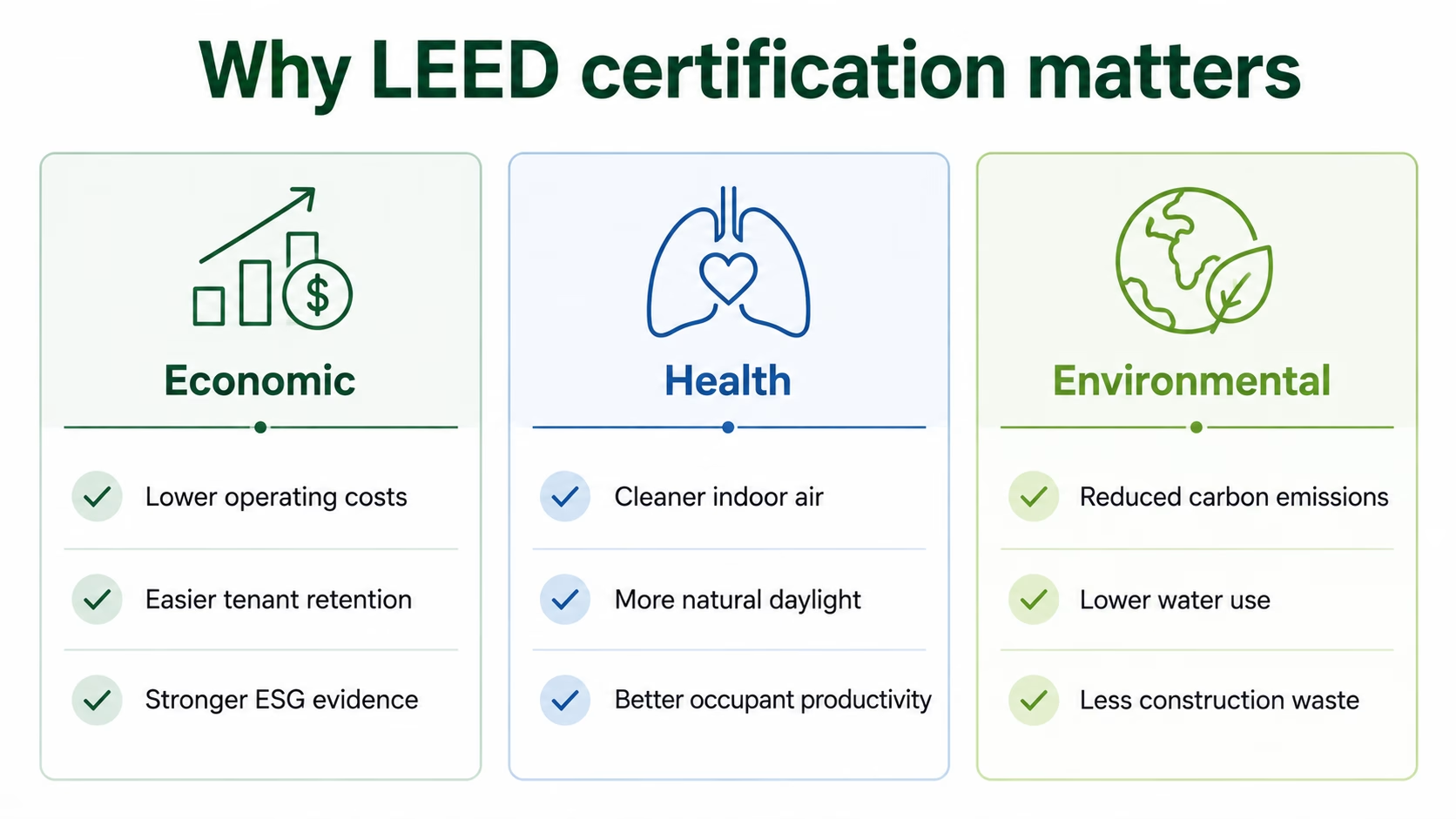
1. Economic Benefits:
- Get an edge on the competition: Market leaders believe that sustainability results in market differentiation and improved financial performance.
- Attract tenants: A building that meets LEED standards or exceeds is less expensive to maintain and produces less waste. Features that improve indoor air quality and increase the amount of natural lighting make tenants more satisfied and attracted.
- Optimize performance: Globally, LEED is the most comprehensive green building project and performance management system. It provides a comprehensive approach to the construction, operation, and performance of green buildings.
- Cost-effective: LEED rating systems help save energy, and water, reduce maintenance and reduce waste in buildings. Thus it is cost-effective.
- Supports ESG and disclosure requirements: LEED v5 requires carbon assessment and reporting on every project and issues a standardised impact report on certification — useful evidence for investors, lenders and corporate sustainability reporting.
2. Health Benefits:
- With LEED, you create healthier spaces with cleaner air, access to daylight, and no hazardous chemicals found in paints and finishes.
- Ambiance: Improved indoor air quality can reduce absenteeism and work hours of employees affected by asthma, respiratory allergies, depression, and stress, as well as improve productivity.
- Reduced Pollution: Buildings that are energy-efficient help reduce pollution and improve outdoor air quality in industrialized areas, making LEED a key tool for reducing smog.
3. Environmental Benefits:
- Helps the environment: LEED Certified building helps to conserve water, reduces carbon emission, and helps in reducing waste.
- Establish sustainable strategies: Both new and existing buildings can benefit from LEED by implementing sustainable and greener strategies in order to become high-performing buildings.

What LEED v5 changed about the argument
LEED v5, launched on 28 April 2025, sharpened the case considerably. About half of all available points now sit under decarbonization, with the remainder split between quality of life and ecological conservation and restoration. Carbon and climate-risk assessments are mandatory on every project rather than optional credits.
The practical consequence: LEED is no longer only a sustainability badge, it is a carbon accounting framework. For owners with net-zero commitments and for the professionals advising them, fluency in v5 is a working requirement rather than a differentiator. Our LEED v5 guide for GA and AP candidates covers what this means for the exams.
Why it matters for your career
For individuals, a LEED credential is portable in a way most construction qualifications are not — it is recognised in more than 180 countries and is frequently listed as a preferred or required qualification on sustainability, design and project management roles. Because it runs on a two-year cycle with continuing education attached, it also signals current knowledge rather than a qualification earned once and left to age. If you are weighing where to start, how to become a LEED Professional sets out the route, and what is LEED covers the fundamentals.
Key reasons why the LEED Certification is important are mentioned above to provide aspiring LEED practitioners the information needed to help them make informed decisions and very importantly, improve their careers while increasing their earnings. LEED rating system is globally recognized. It is very important that individuals who plan, design or implement the LEED rating systems in the building be LEED certified.
Ready to pursue a career in LEED? Enroll with 3FOLD TRAINING to begin your LEED Certification process. 3FOLD TRAINING is the right place for you as we provide quality training to help professionals and aspirants meet their career goals.
3FOLD TRAINING provides expert training and world-class study materials to help delegates earn the LEED Credentials. We provide LEED Green Associate training, LEED AP BD+C training, and the LEED GA and AP BD+C combo course, all aligned to LEED v5.
You can reach us via the following mediums WhatsApp, Email, or inquiry form.



Leave a Reply
Your email is safe with us.