
Materials and Resources is worth 9 questions on the LEED Green Associate exam. It covers material health, embodied carbon, material impacts, product transparency and waste, with LEED v5 placing greater emphasis on embodied carbon and circularity.
Under earlier versions of LEED, embodied carbon was a specialist interest. Under LEED v5 it is central. If your notes barely mention it, they are out of date.
Material health
Chemicals of concern are substances posing health or environmental risk — heavy metals, formaldehyde, flame retardants among them.
Volatile organic compounds (VOCs) are chemicals that off-gas from products at normal indoor temperatures. They are the reason paints, adhesives, sealants and composite wood products are specified as low-emitting.
People are exposed by breathing off-gassed chemicals or contaminated dust. This is the clearest link between this domain and Indoor Environmental Quality: the material choice is made here and the benefit is felt there.
Sufficiency and material efficiency
Two terms that sound similar and are examined on the difference:
| Term | Meaning |
| Sufficiency | Avoiding demand for materials and resources in the first place |
| Material efficiency | Using less material to perform the same function |
Sufficiency asks whether the material is needed at all. Efficiency asks how to use less of it. Right-sizing a structure, prefabricating to cut offcuts and removing unnecessary finish layers are efficiency measures; deciding not to build the extra floor is sufficiency.
Watch the everyday meaning. “Sufficient” colloquially means “enough”, which points the opposite way. In LEED, sufficiency means avoiding the demand. This trips people up reliably.
Linear versus circular
| Linear model | Circular model |
| Take, make, waste | Reuse, repair, repurpose, recycle |
| Single use, then landfill | Design for flexibility and disassembly |
| High demand for virgin resources | Materials continuously reused and recycled |
| Embodied impacts discarded | Virgin-resource demand falls |
Building reuse can be a highly effective embodied-carbon strategy. Retaining existing structural and enclosure elements can avoid the extraction, manufacturing and other initial impacts associated with replacing them with new materials.
A caution worth carrying into questions: reuse is a carbon strategy, not automatically an energy strategy. Older buildings frequently use more operational energy, which is why reuse is usually paired with a deep energy retrofit.
Life cycle and embodied carbon
Life-Cycle Assessment (LCA) evaluates the environmental impacts of a product or building across defined life-cycle stages, including material extraction and manufacturing, transportation and construction, use-stage impacts, and end of life. The exact stages included depend on the LCA scope.
Do not confuse it with life-cycle cost analysis, which weighs purchase cost against long-term operating cost. One measures environmental impact, the other measures money, and they sit in different domains. The names are close enough that the exam uses it.
Embodied carbon comes in two forms:
- Embodied carbon — materials. Carbon locked into making materials. Reduced by using less, choosing lower-carbon products and sourcing locally.
- Embodied carbon — construction. Carbon from transport, equipment, rework and site activity during construction.
Embodied carbon is largely fixed once the building is built. Concrete, steel, aluminium, glass and façade systems dominate it, because of both the volume used and the energy intensity of producing them. You cannot retrofit your way out of it, which is why assessment belongs early in design.
Product declarations
| Document | Discloses |
| Environmental Product Declaration (EPD) | Life-cycle environmental impacts, in a standardised format |
| Health Product Declaration (HPD) | Ingredients and associated hazards |
| Multi-attribute certifications | Performance across several sustainability dimensions at once |
The distinction the exam tests: disclosure is not optimisation. A product can have a full EPD and still perform badly. The EPD simply makes its impacts visible so a team can compare honestly. Treating either document as a seal of approval is the mistake.
Holistic assessment means weighing carbon, health, durability, sourcing and cost together. No single attribute tells the whole story.
Waste
Plan to avoid waste, not just to haul it away.
- Construction and demolition waste. Planned in design. Minimise overage — extra material ordered “just in case”.
- Operations and ongoing waste. Accessible collection so occupants can divert daily waste.
- Waste diversion. Keeping waste out of landfill and incineration through reuse, recycling and composting. Note it is an outcome measure — it says nothing about how much waste was created in the first place.
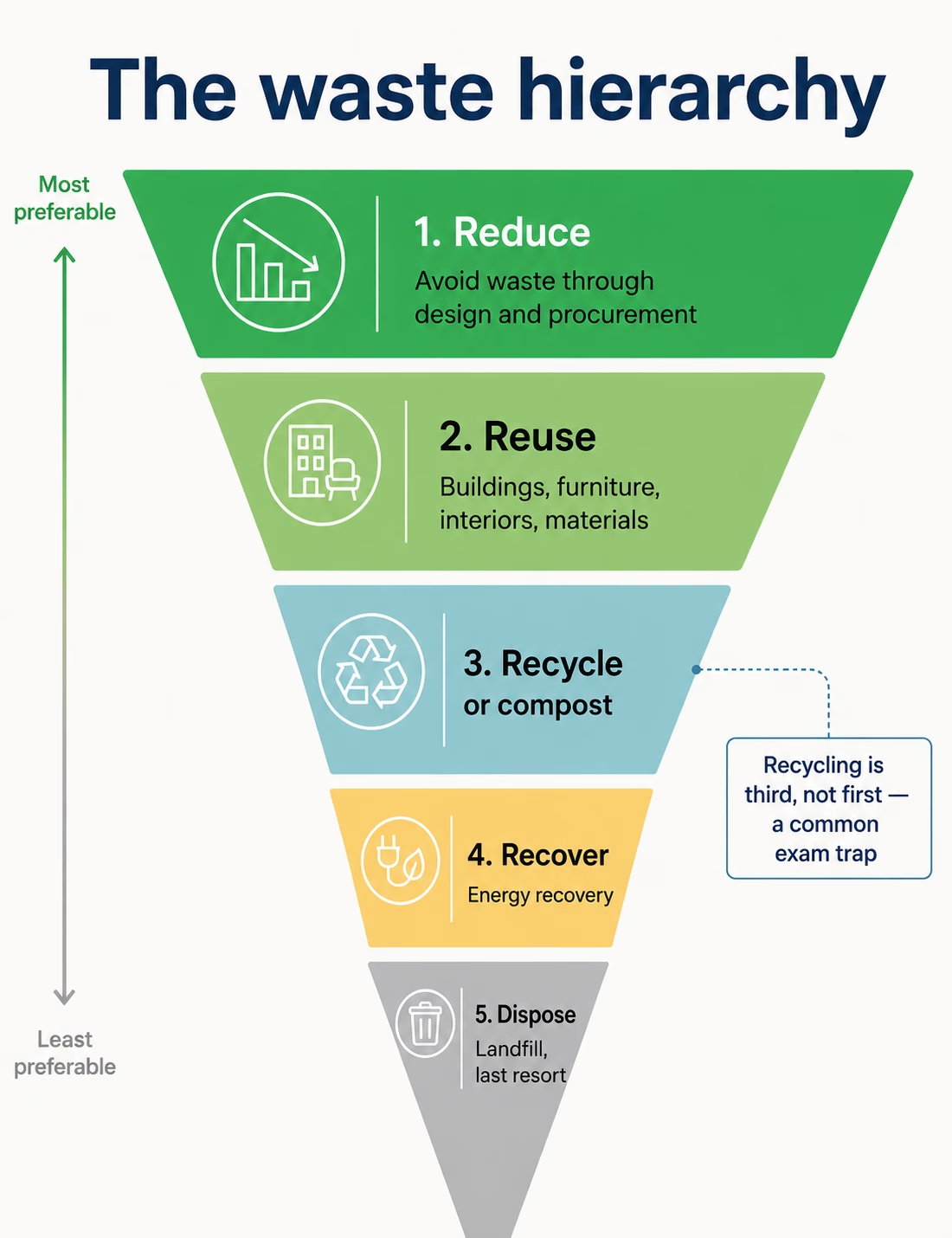
The hierarchy, most preferable first: reduce, reuse, recycle or compost, recover, dispose. Candidates put recycling too high. It is third, not first — waste that is never created needs no management at all.
Dealing with overage runs straight down that hierarchy: design and procure more precisely so less is ordered, return unused stock to the supplier, donate to a reuse outlet, recycle what remains.
Synergies to recognise
- Health and indoor air. Low-emitting materials cut environmental impact and protect indoor air quality.
- Reuse and carbon. Building and material reuse slash embodied carbon.
- Circularity and design. Designing for disassembly keeps materials in productive use indefinitely.
Key terms to memorise
| Term | Definition |
| VOCs | Chemicals that off-gas from products at normal indoor conditions |
| Sufficiency | Avoiding demand for materials and resources in the first place |
| Material efficiency | Using materials efficiently and avoiding unnecessary material use while achieving the required function |
| Material circularity | Continuously reusing and recycling resources rather than discarding them |
| Life-cycle assessment | Evaluating environmental impact across a product or building’s whole life |
| Embodied carbon | Carbon from producing, transporting and installing materials, and from construction |
| EPD | Discloses life-cycle environmental impacts |
| HPD | Discloses ingredients and hazards |
| Waste diversion | Keeping waste out of landfill and incineration |
| Overage | Extra material ordered beyond what the drawings require |
Where candidates lose marks
- Confusing embodied and operational carbon. One is locked in at construction; the other accrues in use.
- Confusing life-cycle assessment with life-cycle cost analysis. Environment versus money.
- Treating an EPD or HPD as a certification of quality. They disclose; they do not certify.
- Putting recycling at the top of the waste hierarchy. It is third.
- Reading “sufficiency” as “enough”. It means avoiding the demand entirely.
- Assuming reuse always saves operational energy. It saves embodied carbon; operational energy usually needs a retrofit.
Revision checklist
1.Define VOCs and name where they come from.
2.Distinguish sufficiency from material efficiency in one sentence each.
3.Describe the linear and circular models.
4.Explain what LCA covers and how it differs from life-cycle costing.
5.Define embodied carbon and name the materials that dominate it.
6.State what an EPD discloses, what an HPD discloses, and why neither is a certification.
7.Recite the waste hierarchy in order and define waste diversion.
Test yourself
Work through our 12 Materials and Resources practice questions, then the 50-question mock exam.
Frequently asked questions
How many Materials and Resources questions are on the exam?
Materials and Resources accounts for 9 questions on the 100-question LEED Green Associate exam.
Do I need to know specific product standards or thresholds?
Not at Green Associate level. You need to recognise what tools like LCA, EPDs and HPDs are for.
Has this domain changed much under LEED v5?
Yes. Embodied carbon carries far more weight than under earlier versions, so material written for LEED v4 will underprepare you here.
What is the difference between an EPD and an HPD?
An EPD discloses life-cycle environmental impacts. An HPD discloses ingredients and their hazards. Neither certifies that a product is good.
Learning this properly
3FOLD TRAINING covers material health, circularity, embodied carbon and waste as a full module in LEED Green Associate training, written to LEED v5. Ask us through the course enquiry form.




Leave a reply