

There are five LEED AP specialties, and the right one is the one that matches the buildings you actually work on. That sounds too simple to be advice, but it is the answer, and the reason people search for something more complicated is that they are hoping one specialty is worth more than the others. Before the detail, one disclosure: we train LEED AP BD+C and not the other four, so read our reasoning with that in mind.
The five, and what each is for
From the LEED AP with Specialty Candidate Handbook:
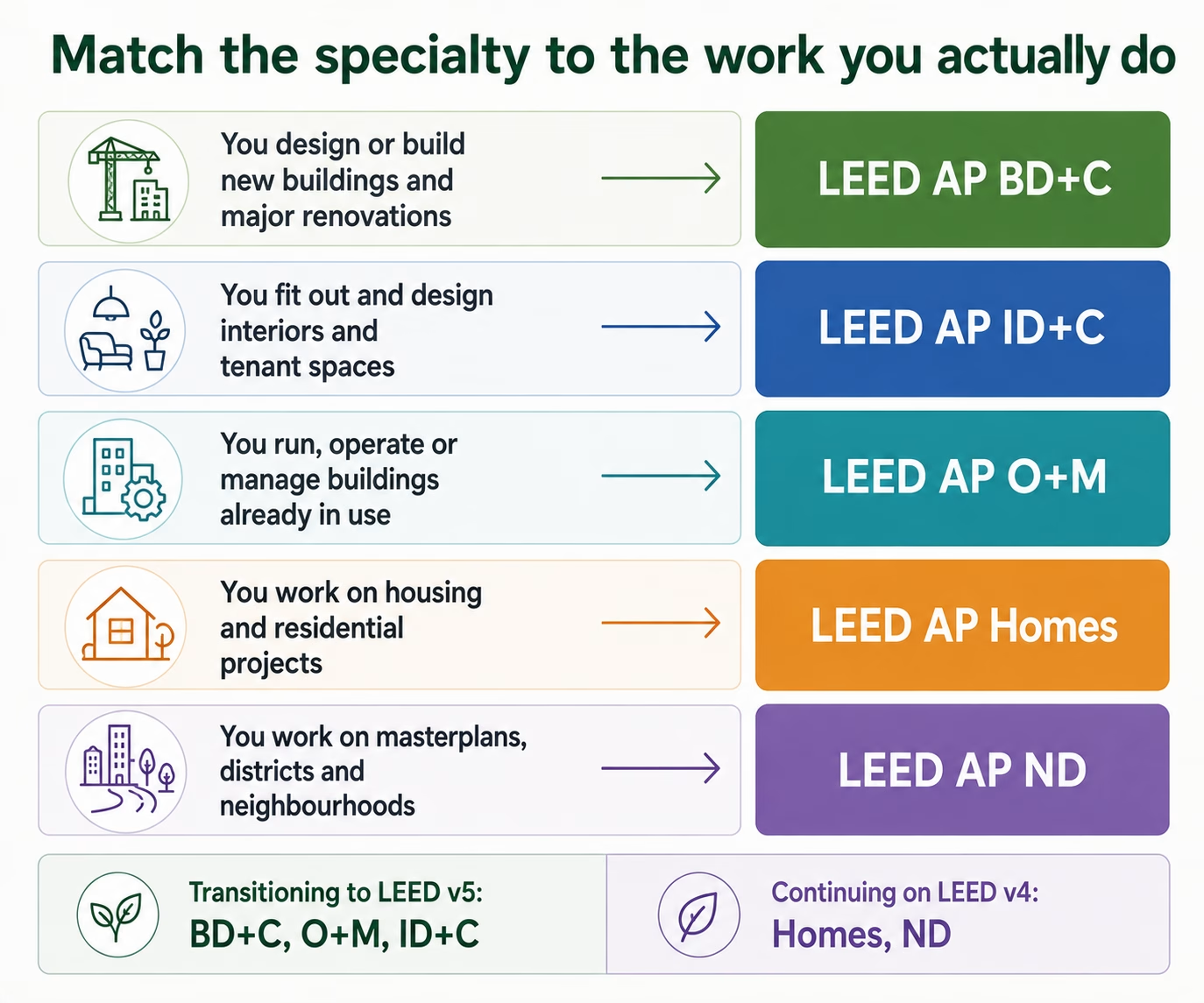
| Specialty | Covers | You, if you work on… |
| LEED AP BD+C | Buildings — new construction and major renovations | New buildings, major refurbishments. Architects, engineers, contractors, developers, design-side consultants |
| LEED AP ID+C | Interior Design and Construction | Fit-outs, tenant spaces, workplace interiors. Interior designers, workplace consultants, fit-out contractors |
| LEED AP O+M | Operations and Maintenance | Buildings already in use. Facility managers, asset and portfolio managers, operations teams |
| LEED AP Homes | Residential projects under the LEED Homes rating system | Housing, residential developments |
| LEED AP ND | Neighborhood Development | Masterplans, districts, urban development. Planners, urban designers, large-scale developers |
For the specialty-only exams, candidates must be at least 18 and hold an active LEED Green Associate or LEED AP with Specialty credential at registration and maintain their active status through the exam date. Candidates taking a combined LEED Green Associate/LEED AP with Specialty exam do not need to already hold an active LEED Green Associate credential. See LEED AP requirements.
The version split worth checking
This one matters and it is easy to miss. TThe LEED AP Homes and LEED AP ND exams continue to be based on LEED v4, while the LEED AP BD+C, O+M and ID+C exams have been updated to align with LEED v5.
| Transitioning to LEED v5 | Continuing on LEED v4 |
| BD+C · O+M · ID+C | Homes · ND |
Three consequences worth thinking through.
What you study differs. A Homes or ND candidate is preparing against v4 material while a BD+C candidate prepares against v5. These are not interchangeable, and study material for one version is not study material for the other.
Do not read it as a signal about which credential is better. The handbook records which exams have transitioned; it does not present the sequence as a judgement on the specialties, and neither should you.
It is the kind of fact that changes. Confirm the current position in the handbook before you commit study time — version arrangements are exactly what moves between publications. What v5 changed for BD+C is in LEED AP BD+C v5 exam changes.
How to actually choose
Three questions, in this order. The first settles it for most situations, and the other two are for the exceptions.
1. What kind of building do you spend your working week on?
Match the specialty to it. This is not a compromise answer — it is the correct one, for a reason worth stating.
The AP exam tests situational judgement about a particular kind of project. Your day job is the study material you already own. Choosing a specialty that matches means every project meeting you attend is revision, and every credit decision you watch being made is a worked example. Choosing one that does not means studying a project type you have never worked on, from scratch, with no intuition to fall back on.
And afterwards, the credential describes work you are actually able to do. A LEED AP ND held by someone who has never worked on a masterplan is a credential that invites a question they cannot answer.
2. Which way is your career moving?
The one legitimate reason to choose against your current work: you are deliberately moving into a different kind of project, and you want the credential to support the move rather than describe the past.
That is a real strategy, and it costs more effort, because you are studying without the day-job reinforcement. Go in knowing that.
3. What do the clients you want actually ask for?
If a particular specialty keeps appearing in the tenders your organisation bids for or the roles you want, that is direct evidence about your market — better evidence than any general article can give you, this one included. Look at real job adverts and real tender documents in your region and sector.
What we are not going to tell you
Two things that would be easy to write and would not be true.
Which specialty is “most in demand”. We are not aware of any published breakdown of credentials held by specialty, and demand varies enormously by country, sector and year. Any article ranking the five by demand is ranking them by the author’s impression. In a market dominated by new construction, one specialty will look dominant; in a mature market where the work is retrofit and operation, a different one will.
Which specialty pays best. We do not publish salary figures for LEED credentials anywhere on this site, for reasons set out in what the conflicting LEED AP BD+C salary numbers actually show. The short version: the published figures mostly answer a different question from the one you are asking.
Our declared interest, stated plainly
We deliver LEED AP BD+C training and not the other four specialties. So when a page from us recommends BD+C, you are entitled to discount it.
Here is the honest version. BD+C is the right choice if you work on new buildings and major renovations. It is the wrong choice if you manage buildings in use, fit out interiors, build housing or plan districts. In those cases the specialty that matches your work is the better credential, and we do not offer it.
If that is you, take the exam that fits. A credential that matches your work is worth considerably more than a credential a training provider happened to be selling.
Can you hold more than one?
The handbook makes an active LEED AP with Specialty credential an eligibility route in its own right, so adding a further specialty does not send you back through Green Associate.
Whether you should is a different question — a second specialty is a second exam and a second body of material, and it makes sense mainly when you genuinely work across two project types. The rules and the maintenance implications are in holding more than one LEED AP specialty.
If you are still not sure
Answer one question: what was on your screen most of last week?
New building drawings, that is BD+C. A fit-out package, ID+C. Operational data or a maintenance schedule, O+M. Housing units, Homes. A masterplan, ND.
The specialty that matches what you were already doing is the one you are already half-prepared for, and the one that will still describe you accurately in five years.
Frequently asked questions
What LEED AP specialties are there?
Five: BD+C for buildings including new construction and major renovations, ID+C for interior design and construction, O+M for operations and maintenance, Homes for residential projects under the LEED Homes rating system, and ND for neighborhood development.
Which LEED AP specialty should I choose?
The one matching the buildings you work on. Your day job is study material you already have, the exam tests situational judgement about that project type, and afterwards the credential describes work you can actually do.
Are all the LEED AP specialties on LEED v5?
No. The handbook states that the LEED AP Homes and LEED AP ND exams continue to be based on the LEED v4 rating system, and that only BD+C, O+M and ID+C are transitioning to v5. Confirm the current position in the handbook before committing study time.
Is one LEED AP specialty harder to qualify for than another?
No. Eligibility is identical for all five: an active LEED Green Associate credential at registration, or an existing active LEED AP with Specialty credential.
Which LEED AP specialty is most in demand?
We are not aware of a published breakdown of credentials held by specialty, and demand varies by country, sector and year. Job adverts and tender documents in your own region and sector are better evidence than any general ranking.
Can I hold more than one LEED AP specialty?
Yes. An active LEED AP with Specialty credential is itself an eligibility route to a further specialty, so you do not repeat LEED Green Associate. Whether it is worth a second exam depends on whether you genuinely work across two project types.
Is LEED AP BD+C the best specialty?
It is the right one if you work on new buildings and major renovations, and the wrong one if you manage buildings in use, fit out interiors, build housing or plan districts. 3FOLD TRAINING delivers BD+C training and not the other four, so weigh our view accordingly.
If BD+C is your specialty
3FOLD TRAINING has prepared professionals for certification exams since 2008, across more than 100 countries. We deliver LEED AP BD+C training online and in person, for individuals and project teams — and we do not offer the other four specialties, so if one of those fits your work better, take that exam instead. No course is required to sit any of them. Ask through the course enquiry form.


Leave a reply