
LEED AP for Facility and Sustainability Managers
If you run existing buildings, the specialty you probably want is Operations and Maintenance, and we do not teach it. We deliver LEED AP BD+C only. That is worth saying in the first line of a page like this rather than at the bottom, because the whole question turns on a distinction that most pages aimed at facilities professionals blur.
Ask what your buildings are doing
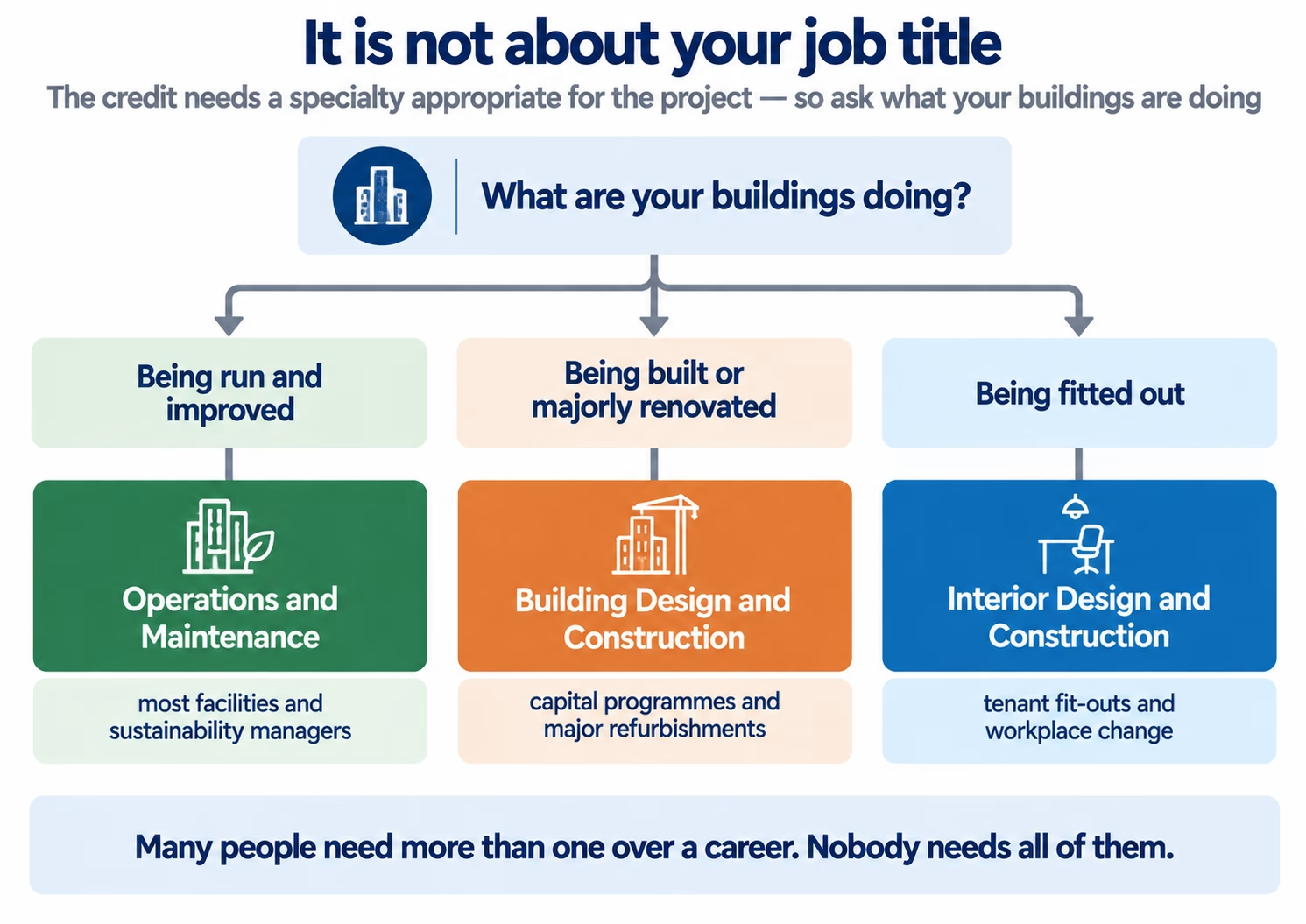
The rating system settles this, not your job title. LEED v5 BD+C awards a project a point where at least one principal participant of the team is a LEED AP with a specialty appropriate for the project. So the question is not "which credential suits a facilities manager". It is "what are the buildings I am responsible for actually doing".
| What your buildings are doing | The specialty that fits | Do we teach it? |
|---|---|---|
| Being run, measured and improved in operation | Operations and Maintenance | No. This is the appropriate specialty for existing-building projects focused on operational improvement; you will need another provider for O+M. |
| Being built, or undergoing major renovation | Building Design and Construction | Yes — this is our course |
| Being fitted out — tenant works, workplace change | Interior Design and Construction | No |
The credit's requirements are as taught in our LEED AP BD+C v5 course material and reflect LEED v5 BD+C. Confirm against the LEED v5 BD+C Rating System before relying on them for a live project.
If your work is primarily on existing buildings pursuing O+M certification, O+M is the specialty appropriate to those projects. That includes operational performance such as energy and water efficiency, waste, indoor environmental quality and ongoing building-management practices. BD+C is appropriate when the project is pursuing the BD+C rating system, such as new construction or a qualifying major renovation.
When BD+C genuinely is your credential
Plenty of people with facilities and sustainability titles belong in the second row instead. You do if:
- You run a capital programme. New buildings, extensions, or a rolling major-renovation pipeline. The scope test is about the building work, not about your department
- You are the client-side lead on a certifying new-build project. If a project is pursuing BD+C certification and you are a principal participant on it, the specialty that earns the point is BD+C
- Your estate is being substantially rebuilt rather than operated. Major renovation sits under BD+C, and "major" is a scope question rather than a budget one
- You are moving toward design and construction work and choosing the credential for where you are going rather than where you are
If any of those describe you, our LEED AP BD+C training is relevant, and the credential decision is set out in is LEED AP BD+C worth it. If none of them do, take the honest answer and go elsewhere.
What holds true whichever specialty you choose
These apply across the credential family, so they are worth knowing before you commit to any of it.
| Fact | Why it matters to you |
|---|---|
| Green Associate does not earn the point | Neither does a LEED AP without a specialty. If your organisation needs the point, it needs specialty holders |
| The credential must be active at certification review | Which can be long after the work. If your projects are reviewed on a recurring cycle, staying current matters more than it would on a one-off |
| Your certificate must be uploaded and current | On your GBCI profile, at review. It sits on your profile, so keeping it current falls to you in practice |
| A specialty supersedes Green Associate | Your Green Associate credential expires and is replaced. You stop using it and stop maintaining it separately |
| Maintenance is every two years | 30 continuing education hours for a LEED AP with Specialty, at least 6 LEED-specific, against 15 and 3 for a Green Associate — from GBCI's Credential Maintenance Program guide, not the candidate handbook. The reporting period runs from your exam date to two years minus one day later |
| Eligibility is the same for all specialties | You must be at least 18 and hold an active LEED Green Associate credential or an active LEED AP with Specialty at registration, and maintain the active credential through the exam. LEED project experience is strongly recommended but is not a requirement. |
Two things specific to this audience
Continuing education should be straightforward for you. Project participation can earn continuing education hours when the activity meets GBCI's Credential Maintenance Program requirements, including work on eligible registered or certified projects. An operations role can provide opportunities for eligible project participation, but day-to-day operations work does not automatically generate LEED CE hours.
Your subject knowledge transfers better than your documentation knowledge. If you already manage energy, water and waste performance, the technical content will feel familiar in any specialty. What will not transfer is the documentation logic — which denominator, which baseline, which credit may claim which quantity. That is the part to plan study time around, and it is the same warning we give architects and engineers.
If you are choosing between two of them
Some people genuinely sit on a line — an estates lead with both an operational portfolio and a build programme. Three things to weigh:
- Which project is nearer. A specialty is most valuable when there is a live project it can be claimed on.
- Which way your role is moving. Your job description can change, while a LEED AP specialty remains a credential you can maintain through the Credential Maintenance Program. Consider the projects you expect to work on over the next reporting periods when choosing a specialty.
- You can hold more than one, and almost nobody needs to. Adding a second specialty is a decision to make later with a project in front of you, not now.
The full comparison is in LEED AP BD+C vs O+M vs ID+C, and the general version of the question is in which LEED AP specialty should you choose.
A note on why this page sends most readers away
Because the alternative is selling the wrong course to someone who would then hold a credential their projects cannot use. The point requires a specialty appropriate for the project , and a BD+C credential on an operations portfolio does not become appropriate by being ours.
Frequently asked questions
Which LEED credential should a facility manager get?
If your buildings are being run rather than built, the Operations and Maintenance specialty is the one that fits them. 3FOLD delivers LEED AP BD+C only, so for most facilities and sustainability managers the honest answer is that our course is not the right one and you will need another provider.
Is LEED AP BD+C useful for a sustainability manager?
It is if your work includes new construction or a project that meets the applicable BD+C scope requirements, including qualifying major renovations. A capital programme, a client-side lead role on a certifying new-build project, or responsibility for a qualifying BD+C renovation can put you in BD+C territory. If your work is primarily energy, water, waste and other operational performance in occupied existing buildings, Operations and Maintenance fits those projects better.
How do I know which LEED AP specialty is right for me?
Ask what your buildings are doing rather than what your job title is. The rating system awards its point to a principal participant holding a specialty appropriate for the project, so being run points to Operations and Maintenance, being built or majorly renovated to Building Design and Construction, and being fitted out to Interior Design and Construction.
Does LEED Green Associate count for the LEED AP point?
No, and neither does a LEED AP without a specialty. If your organisation wants to claim the point on a project it needs someone holding a specialty appropriate to that project, who is a principal participant on the team, whose credential is active at certification review and whose certificate is uploaded and current on their GBCI profile.
How hard is it to maintain a LEED AP credential in an operations role?
Easier than for most credential holders, because project participation earns hours and an operations role is continuous project participation. Renewal is every two years and a LEED AP with Specialty reports 30 continuing education hours, at least 6 of them LEED-specific, as set out in GBCI's Credential Maintenance Program guide. The reporting period runs from your exam date to two years minus one day later rather than from an anniversary.
Can I hold more than one LEED AP specialty?
Yes, and almost nobody needs to. Adding a second specialty is a decision worth making later with a live project in front of you rather than at the start. What you cannot do is keep Green Associate alongside a specialty, because the specialty credential supersedes it and the Green Associate credential expires.
What transfers from facilities work to the LEED AP exam?
The technical subject matter transfers well if you already manage energy, water, waste and occupant comfort. What does not transfer is the documentation logic: which denominator a percentage is measured against, which baseline applies, and which credit may claim a given quantity. That is the part to plan study time around.
Do I need project experience to sit a LEED AP exam?
No. The only eligibility requirement is an active LEED Green Associate credential, or an active LEED AP with Specialty, held at the point of registration. The handbook says prior LEED project experience is strongly recommended, but recommended is not required.
Ask us and we will tell you when it is not us
3FOLD TRAINING has prepared professionals for certification exams since 2008, across more than 100 countries. We deliver LEED AP BD+C only. If you describe your estate and your projects through the course enquiry form we will tell you which specialty fits — and if it is Operations and Maintenance we will say so, because a credential your projects cannot use is worth nothing to you. No course is required to sit or pass any of these exams, ours included.
Is BD+C the right specialty for your projects?
Prepare for the LEED AP BD+C exam with focused training from 3FOLD.




Leave a Reply
Your email is safe with us.