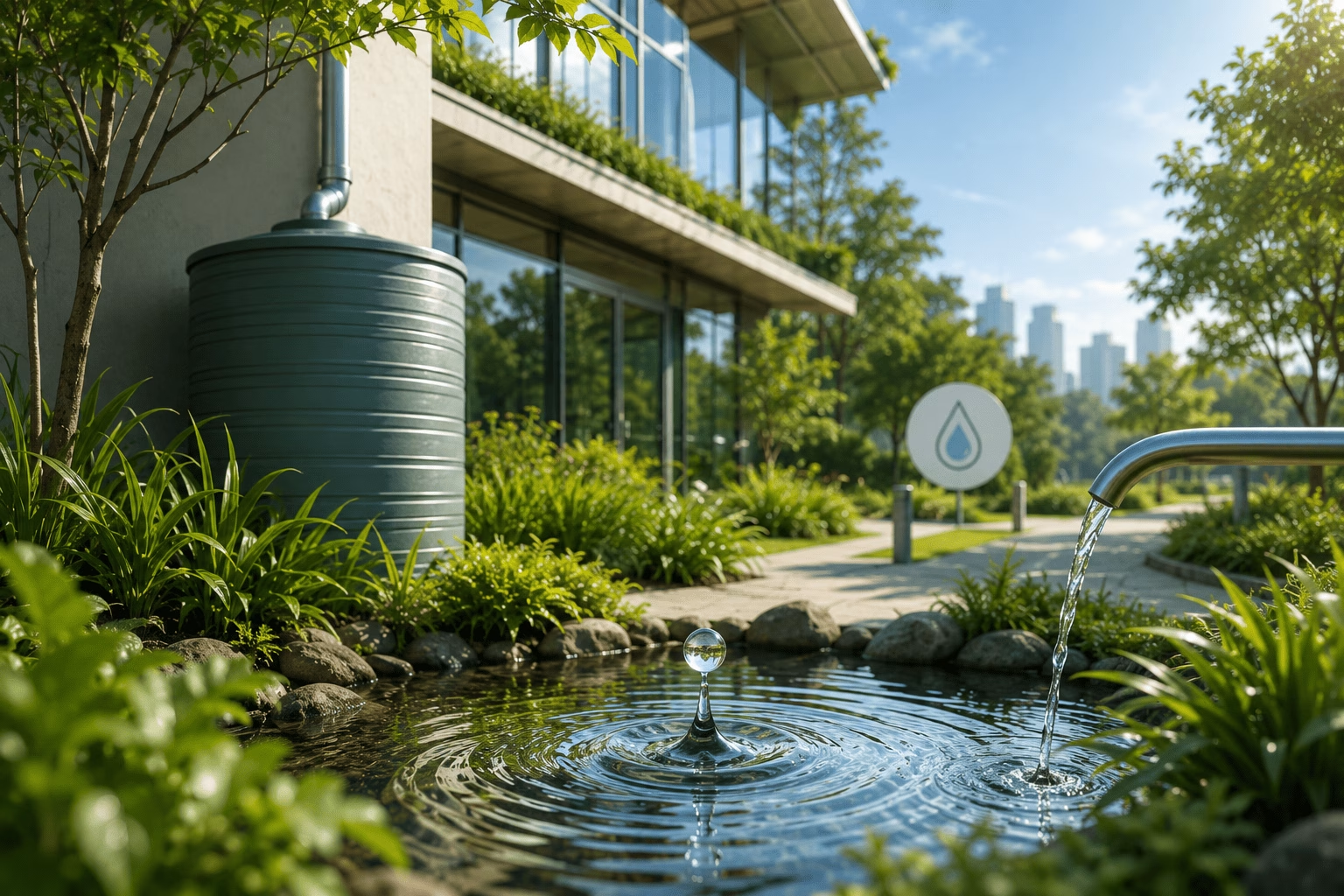
Water Efficiency is worth 10 of the 100 questions on the LEED Green Associate exam. It covers outdoor water use, indoor water use, and water performance management. More than any other domain it rewards knowing precise definitions, which makes it the fastest domain to improve in.
If you are short of study time and want the best return, this is where to spend it. Four or five terms — potable, non-potable, graywater, blackwater, process water — account for a large share of the questions, and they are learnable in an evening.
What this domain covers
The exam specification splits Water Efficiency into three areas: outdoor water use, including planting choice, irrigation control and alternative sources; indoor water use, including low-flow and waterless fixtures, efficient appliances and process water; and water performance management, including metering, submetering, leak detection, cooling towers and water quality.
12 Water Efficiency practice questions
Fill in your details, take all 12 questions, and submit once — we'll grade it and email you the score plus a full explanation for every question.
Take the quiz — get your scored results by email

Where candidates lose marks in this domain
- Confusing graywater with blackwater. Toilets are blackwater. Everything else on the clean side is graywater.
- Reversing flush and flow. Flush per use, flow per minute.
- Thinking metering saves water. It creates information. People save water.
- Forgetting process water. Candidates think of taps and toilets and miss the cooling tower entirely.
- Reaching for alternative sources before reducing demand. Efficiency comes first here too.
Keep practising
- LEED Green Associate practice questions — the mixed set across all eight domains
- Sustainable Sites practice questions — where rainwater is managed
- LEED Green Associate mock exam — 50 timed questions across all eight domains
Frequently asked questions
How many Water Efficiency questions are on the exam?
10 of the 100.
Do I need to memorise specific flush and flow rate figures?
No. At Green Associate level you need to understand what the terms mean and which fixtures they apply to. Specific numerical thresholds belong to the LEED AP specialty exams.
Is rainwater the same as graywater?
No. Rainwater is precipitation collected before use. Graywater is water that has already been used in sinks, baths, showers or clothes washers. Both are non-potable sources, and the exam expects you to keep them separate.
Turning practice into a pass
3FOLD TRAINING covers water types, outdoor and indoor demand, process water and performance management as a full module in LEED Green Associate training, written to LEED v5. Ask us through the course enquiry form.



Leave a reply