
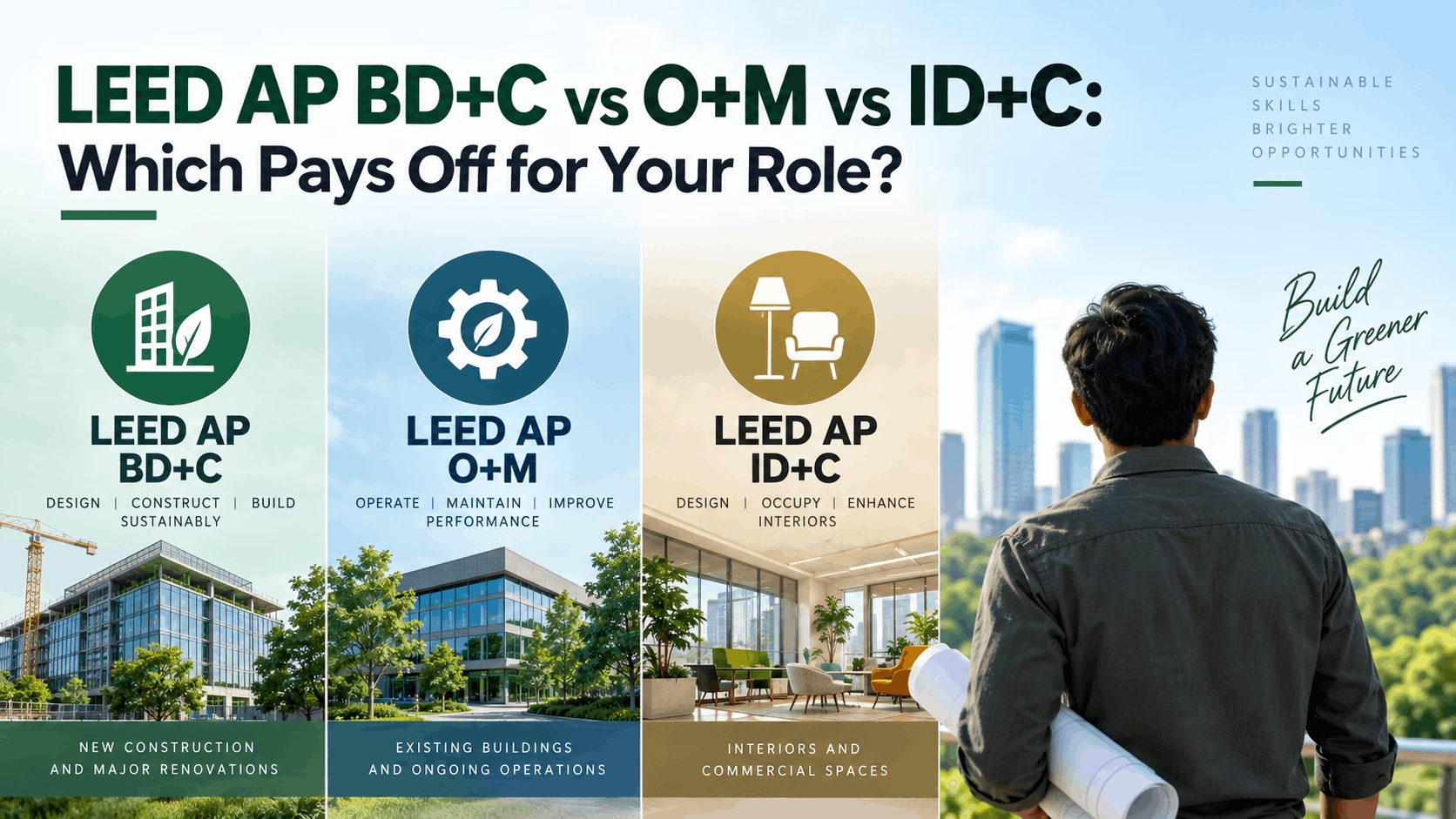
Which LEED AP Specialty Pays Off?
Compare all five LEED AP specialties by project type, professional role, exam version and the one decision rule that determines which credential can create value for your work.
Before anything else: we sell LEED AP BD+C training and we do not sell the others. A page ranking five specialties, published by a company that teaches one of them, is a conflict of interest and you should read it that way. What follows is built so that the decision rule does the work rather than our preference — and the rule sends a lot of readers to specialties we do not teach.
The question in the title is the wrong question
"Which pays off" assumes a specialty has a value of its own. It does not. A project has value; the specialty is what lets a project claim it.
LEED v5 BD+C awards a point where at least one principal participant of the team is a LEED AP with a specialty appropriate for the project. That phrase is the entire decision rule. The specialty that pays off is the one your work can actually be named on — and a specialty your projects cannot claim is worth nothing, however well regarded it is.
The credit's requirements are as taught in our LEED AP BD+C v5 course material and reflect LEED v5 BD+C. Confirm against the LEED v5 BD+C Rating System before relying on them for a live project.
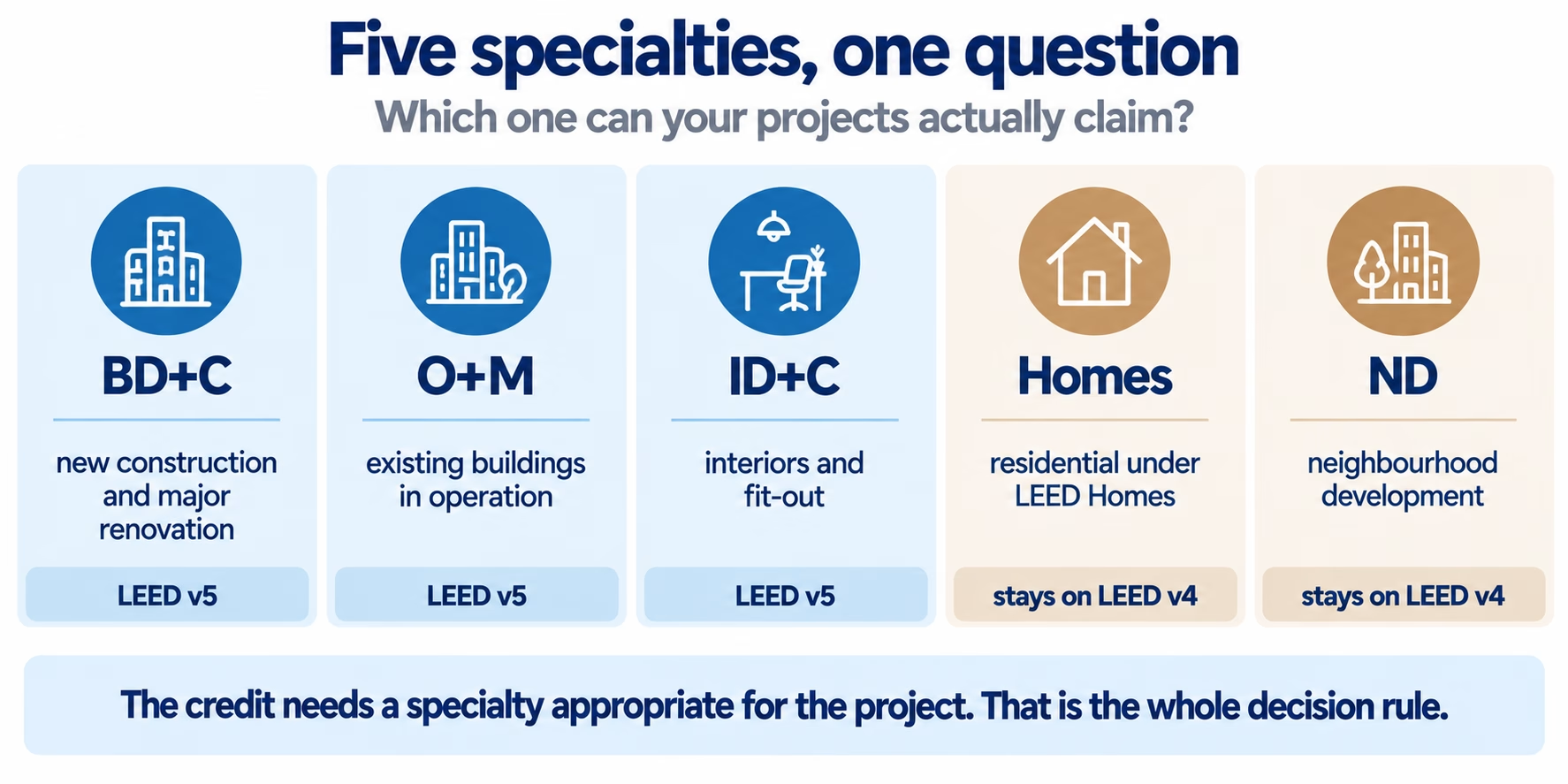
The five, and what each covers
| Specialty | Covers | Rating system version |
|---|---|---|
| LEED AP BD+C | Buildings — new construction and major renovations | LEED v5 |
| LEED AP O+M | Operations and maintenance — existing buildings focused on operational improvement | LEED v5 |
| LEED AP ID+C | Interior design and construction — fit-out and interiors | LEED v5 |
| LEED AP Homes | Residential projects under the LEED Homes rating systems | Remains on LEED v4 |
| LEED AP ND | Neighborhood development | Remains on LEED v4 |
The version column is the fact comparison pages tend to miss. Homes and ND exams continue to be based on the LEED v4 rating system while the other three moved to v5. We report that because it is published; we do not explain it, because USGBC's reasoning is not.
The three v5 specialties, head to head
| Comparison | BD+C | O+M | ID+C |
|---|---|---|---|
| The project is | Being built or majorly renovated | Being run and improved | Being fitted out |
| Roles it fits | Architects, design managers, MEP and energy engineers, contractor and developer sustainability roles | Facilities and operations leads, estate sustainability managers, portfolio energy managers | Interior designers, workplace and fit-out project managers, tenant-side leads |
| The work it maps to | Design decisions, construction documentation, commissioning | Measured performance in occupation, policy, procurement, reporting | Interior specification within a building someone else built |
| Do we teach it? | Yes — this is our course | No | No |
How to choose in one question
Not "what is my job title" and not "which is most respected". Ask: what is the next project I could realistically be a principal participant on, and what is that project doing?
- Being built or majorly renovated → BD+C
- Being run → O+M
- Being fitted out → ID+C
- Residential under LEED Homes, or a neighbourhood-scale project → Homes or ND, and note you would be sitting a v4 exam
If two answers are plausible, take the one with the nearer live project. A credential earns its keep when there is something to claim it on.
What is identical across all five
Worth knowing, because the differences get all the attention and these do not change with your choice.
| Item | The same for every specialty |
|---|---|
| Eligibility | An active LEED Green Associate credential, or an active LEED AP with Specialty, at the point of registration. No degree, no licence, no project experience |
| Project experience | Strongly recommended, never required |
| What happens to Green Associate | Superseded. Whichever specialty you earn, your Green Associate credential expires and is replaced |
| How you write it | The credential name and specialty after your name. Never “LEED Accredited Professional”, and never “LEED Certified”, which applies to buildings |
| Your certificate | A PDF from the Credentials Dashboard. Hard copies are not issued, and it must be uploaded and current on your GBCI profile at certification review |
| Maintenance | Every two years. 30 continuing education hours for any LEED AP with Specialty, at least 6 LEED-specific , against 15 and 3 for a Green Associate — the hour counts are in GBCI's Credential Maintenance Program guide , not the candidate handbook |
Holding more than one
You can. Almost nobody needs to. A second specialty is worth adding when you have a project of a different type that you will be a principal participant on — which is a decision to make with the project in front of you, not in advance. Each one is a separate exam, a separate fee and separate preparation. How multiple specialties are reported for credential maintenance is set out in GBCI's Credential Maintenance Program guide , and is worth checking there before you commit to a second.
The exception worth naming: people whose careers cross the design-to-operation boundary — an estates lead who commissions new buildings and then runs them — genuinely do use two. Even then, sit the one with the nearer project first.
Which one we can help with, and which we cannot
We deliver LEED AP BD+C only. If the decision rule above points you at BD+C, our LEED AP BD+C training is one route and the syllabus is set out across the domain deep dives. If it points you at O+M or ID+C, you will need another provider, and we would rather say that than sell you a credential your projects cannot claim.
The step-by-step version of this decision is in which LEED AP specialty should you choose. If you are still deciding whether to sit any of them, start with is LEED AP BD+C worth it.
Frequently asked questions
Which LEED AP specialty is best?
None of them is best in the abstract, because a specialty has no value of its own. The rating system awards its point to a principal participant holding a specialty appropriate for the project, so the best specialty is the one your work can actually be named on. A well-regarded credential your projects cannot claim is worth nothing to you.
What is the difference between LEED AP BD+C, O+M and ID+C?
What the project is doing. Building Design and Construction covers buildings being built or majorly renovated, Operations and Maintenance covers existing buildings being run and improved, and Interior Design and Construction covers fit-out and interiors. All three are examined against LEED v5.
Are all LEED AP specialties on LEED v5?
No. Building Design and Construction, Operations and Maintenance, and Interior Design and Construction moved to LEED v5. LEED AP Homes and LEED AP ND exams continue to be based on the LEED v4 rating system. USGBC does not publish its reasoning for that, so we report the split without explaining it.
Can I hold more than one LEED AP specialty?
Yes, and almost nobody needs to. A second specialty earns its keep when you have a project of a different type that you will be a principal participant on, which is a decision to make with that project in front of you. Each is a separate exam and fee, and GBCI's Credential Maintenance Program guide sets out how multiple specialties are reported.
Is the eligibility requirement the same for every specialty?
Yes. An active LEED Green Associate credential, or an active LEED AP with Specialty, held at the point of registration. No degree, no licence and no project experience are required for any of them, and prior LEED project experience is strongly recommended rather than required.
Does earning a specialty replace LEED Green Associate?
Yes, whichever specialty you earn. The specialty credential supersedes LEED Green Associate: your Green Associate credential expires and is replaced, so you stop using it and stop maintaining it separately. On a CV the specialty credential is what appears and Green Associate comes off.
How much continuing education does a LEED AP specialty need?
30 continuing education hours every two years for any LEED AP with Specialty, at least 6 of them LEED-specific, against 15 and 3 for a LEED Green Associate, as set out in GBCI's Credential Maintenance Program guide rather than in the candidate handbook. The reporting period runs from your exam date to two years minus one day later rather than from an anniversary, and project participation earns hours.
Which specialties does 3FOLD teach?
LEED AP BD+C only. We do not deliver Operations and Maintenance, Interior Design and Construction, Homes or ND, so if the decision rule points you at one of those you will need another provider. We would rather say so than sell a course for a credential your projects cannot claim.
Choosing, with our interest on the table
3FOLD TRAINING has prepared professionals for certification exams since 2008, across more than 100 countries. We teach one of these five specialties and we have said which. Describe your next project through the course enquiry form and we will tell you which specialty it points at, including when the answer sends you elsewhere. No course is required to sit or pass any of these exams, ours included.
Does your next project point to BD+C?
Prepare for the LEED AP BD+C exam with focused training from 3FOLD.





Leave a Reply
Your email is safe with us.