
There are two sets of numbers attached to the LEED BD+C credit categories and they are not the same thing. The exam distributes 85 scored questions across eight knowledge domains. The rating system distributes 110 points across eight credit categories with almost the same names. Studying by the wrong set is one of the easiest ways to spend your preparation in the wrong places, and where they diverge, the divergence is worth acting on.
The distinction, in one sentence each
The exam specification tells you what you will be asked about. Eight knowledge domains, 85 scored questions, published in the LEED AP with Specialty Candidate Handbook. This is your study plan.
The rating system tells you what a project earns points for. The LEED v5 BD+C scorecard has 110 possible points across its categories, plus prerequisites that are compulsory and earn no points.
You need both. But when you are deciding where to spend Thursday evening, the exam specification is the one that answers the question.
The two tables
What the exam asks about
| Knowledge domain | Scored questions |
| Energy and Atmosphere | 18 |
| Materials and Resources | 13 |
| Indoor Environmental Quality | 13 |
| Sustainable Sites | 9 |
| Water Efficiency | 9 |
| Integrative Process, Planning and Assessments | 8 |
| Location and Transportation | 8 |
| LEED Process | 7 |
| Total scored | 85 |
The exam is 100 questions; 15 are unscored trial items placed at random. See the LEED AP BD+C exam format.
What a project earns points for
| Credit category | New Construction | Core and Shell |
| Energy and Atmosphere | 33 | 27 |
| Materials and Resources | 18 | 21 |
| Location and Transportation | 15 | 15 |
| Indoor Environmental Quality | 13 | 11 |
| Sustainable Sites | 11 | 11 |
| Project Priorities | 10 | 10 |
| Water Efficiency | 9 | 8 |
| Integrative Process | 1 | 7 |
| Total | 110 | 110 |
Rating-system point allocations as taught in our LEED AP BD+C v5 course material. Confirm against the LEED v5 BD+C Rating System before relying on them for a live project.
Where the two disagree, and what it means for your revision
Four differences worth acting on.
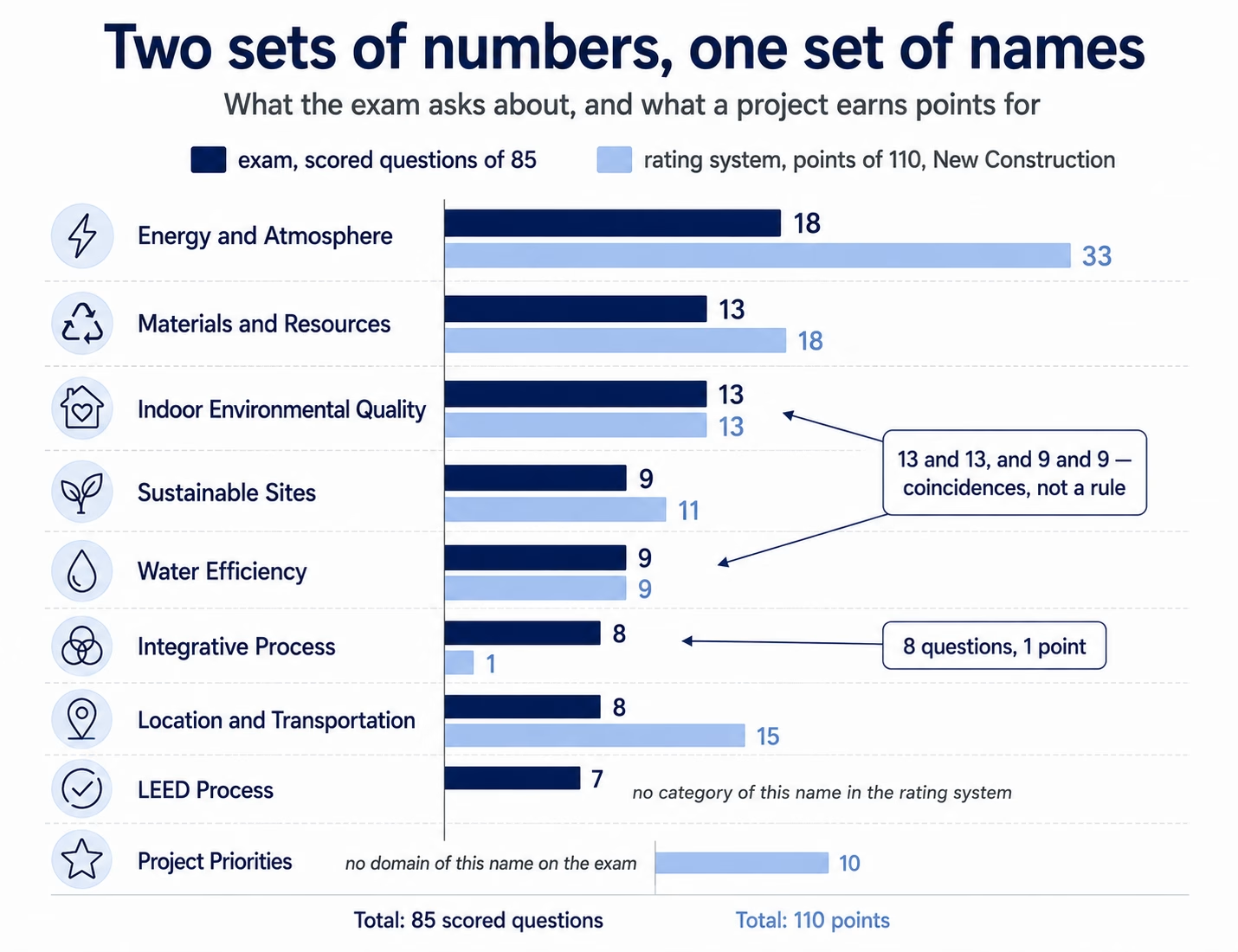
- Energy and Atmosphere is heavy on both, and heavier on the rating system. 18 of the 85 scored questions, and 33 of the 110 points for New Construction — the largest item in both tables. More than one question in five sits here. Start here: Energy and Atmosphere for LEED AP BD+C.
- Integrative Process is the sharpest divergence in the whole comparison. Eight scored questions and one point for a New Construction project. Read the rating system and you would conclude it barely matters. Read the exam specification and it is worth more questions than LEED Process.
The reason is that the exam is testing a way of working rather than a credit. Assessments, charrettes, setting goals before design is fixed — these shape everything downstream and are examined accordingly. A candidate who allocates study time by rating-system points will badly under-study this domain, because one point out of 110 buys almost no attention while eight questions out of 85 is nearly a tenth of the paper.
- Location and Transportation goes the other way. 15 points and 8 scored questions — a large slice of the rating system, a modest slice of the exam.
- LEED Process has no rating-system category, and Project Priorities has no exam domain. Seven scored questions on how LEED itself works — certification, roles, the rating system family — earn no points, because they are not something a project gets credit for. And Project Priorities is 10 points on the scorecard with no domain of its own on the exam specification. The two lists are not the same list.
The two coincidences that catch people
Indoor Environmental Quality is 13 scored questions and 13 points for New Construction. Water Efficiency is 9 and 9.
Water Efficiency does the same thing — 9 scored questions and 9 New Construction points. Two coincidences, and that is exactly what they are: the numbers count different things and happen to land on the same value twice. Which is precisely why candidates who notice one start assuming the systems are aligned. Check Energy and Atmosphere — 18 and 33 — and the idea collapses.
If you take one habit from this page: whenever you meet a number, ask whether it is a question count or a point value.
Prerequisites earn nothing and cannot be skipped
The point tables above count credits. They do not count prerequisites, which are compulsory and worth zero.
That is not a technicality. A project meeting every prerequisite and earning no credits certifies at no level at all. A project with 80 points that has missed a prerequisite does not certify either. Prerequisites are a gate, not a scoring opportunity — and they are easy to overlook when you are thinking about points.
Certification levels
| Certified | 40–49 points |
| Silver | 50–59 |
| Gold | 60–79 |
| Platinum | 80 and above, to the 110 maximum |
The two top levels are compared in LEED Gold vs LEED Platinum.
The rule that makes Platinum different
Worth knowing before you study anything else.
Under LEED v5, reaching 80 points does not by itself earn Platinum. The rating system sets additional mandatory achievements a Platinum project must meet, and three of the four sit in Energy and Atmosphere, with the fourth in Materials and Resources. Miss any one of them and the project certifies Gold, however many points it has.
Which tells you something about where LEED v5 puts its weight, and it is consistent with everything else in the two tables: energy and carbon are not one category among eight. They are the spine.
The specific requirements are set out in the Energy and Atmosphere deep dive, since three of the four live there.
How to use this in a study plan
Four rules that follow directly from the tables.
- Allocate by exam weight, not by points. The exam specification is the document being examined against.
- Energy and Atmosphere first. It is the biggest domain, the biggest category, and the location of three of the four Platinum requirements.
- Do not skip Integrative Process because it is worth one point. Eight scored questions.
- Learn the prerequisites as a set. They are worth no points, and a project that misses one does not certify at all.
The eight domain deep dives
| Domain | Scored questions | Deep dive |
| Energy and Atmosphere | 18 | Energy and Atmosphere |
| Materials and Resources | 13 | Materials and Resources |
| Indoor Environmental Quality | 13 | Indoor Environmental Quality |
| Sustainable Sites | 9 | Sustainable Sites |
| Water Efficiency | 9 | Water Efficiency |
| Integrative Process | 8 | Integrative Process, Planning and Assessments |
| Location and Transportation | 8 | Location and Transportation |
| LEED Process | 7 | LEED Process and project priorities |
If you are coming from Green Associate, the weights have moved and the movement is the teaching point — see from LEED GA to LEED AP.
Frequently asked questions
How many points is LEED v5 BD+C?
110 points for both New Construction and Core and Shell, distributed across eight credit categories, with prerequisites that are compulsory and earn no points. Confirm the allocation against the LEED v5 BD+C Rating System before relying on it for a live project.
What are the LEED AP BD+C exam weightings?
Energy and Atmosphere 18, Materials and Resources 13, Indoor Environmental Quality 13, Sustainable Sites 9, Water Efficiency 9, Integrative Process Planning and Assessments 8, Location and Transportation 8, and LEED Process 7. Those total the 85 scored questions.
Are the exam weightings the same as the rating system points?
No, and confusing them is a common way to misallocate study time. The exam distributes 85 scored questions across eight knowledge domains; the rating system distributes 110 points across eight credit categories with similar names. Energy and Atmosphere is 18 questions and 33 points for New Construction.
Why is Integrative Process worth only one point but eight exam questions?
Because the exam is testing a way of working rather than a credit. Assessments, charrettes and goal-setting before design is fixed shape everything downstream, so they are examined heavily even though the New Construction rating system awards a single point for the credit.
Which LEED BD+C category has the most points?
Energy and Atmosphere, with 33 points for New Construction and 27 for Core and Shell. It is also the largest exam domain at 18 scored questions.
Do prerequisites earn points?
No. Prerequisites are compulsory and worth zero points. A project that misses one does not certify at any level regardless of how many points it has earned.
What are the LEED certification levels?
Certified at 40 to 49 points, Silver at 50 to 59, Gold at 60 to 79, and Platinum at 80 up to the 110 maximum. Under LEED v5, reaching 80 points is not by itself sufficient for Platinum, because additional mandatory achievements apply.
Which category should I study first for LEED AP BD+C?
Energy and Atmosphere. It is the largest exam domain at 18 scored questions, the largest rating-system category, and where most of the additional Platinum requirements sit.
Studying to the weighting
3FOLD TRAINING has prepared professionals for certification exams since 2008, across more than 100 countries. Our LEED AP BD+C training allocates time by exam weight rather than by category size, which is the distinction this page is about. No course is required to sit or pass the exam, ours included. Ask through the course enquiry form.



Leave a reply