
LEED AP BD+C for Architects
Architects have a particularly direct case for LEED AP BD+C. The reason is not simply that LEED is about buildings — it is that the rating system can award a point for having an appropriately credentialed LEED AP as a principal participant on the project team.
Architects have a particularly direct case, and it is not the one usually given. It is not that LEED is about buildings. It is that the rating system awards a point for having a LEED AP as a principal participant on the team, and on many projects the architect is the person who is there throughout.
Why the architect is usually the named accredited professional
LEED v5 BD+C awards a project a point where at least one principal participant of the project team is a LEED AP with a specialty appropriate for the project — Building Design and Construction for New Construction and Core and Shell.
A point attached to a principal participant
On many projects, the architect is a continuous senior presence between concept and certification review — which makes the role a natural fit for the project requirement.
“Principal participant” is the operative phrase. It means a key member of the team rather than an occasional reviewer, and it rules out borrowing a name from a consultant who drops in twice. Consultants come and go across a project's life; the architect often does not. On many projects the architect is a continuous senior presence between concept and certification review, which is exactly what the phrase is testing for.
Project-use note: The point value and the credit's requirements are as taught in our LEED AP BD+C v5 course material and reflect LEED v5 BD+C. Confirm against the LEED v5 BD+C Rating System before relying on them for a live project.
Two consequences follow, and they are the practical reason to hold it:
- Your practice can name you on a bid. A firm pursuing LEED work needs credentialled people it can point at, and enough of them that one departure does not cost a point.
- The project team must have a qualifying principal participant. The project team must have at least one principal participant who is a LEED AP with a specialty appropriate for the project. For New Construction and Core and Shell, the appropriate specialty is LEED AP BD+C.
How much of it is already yours
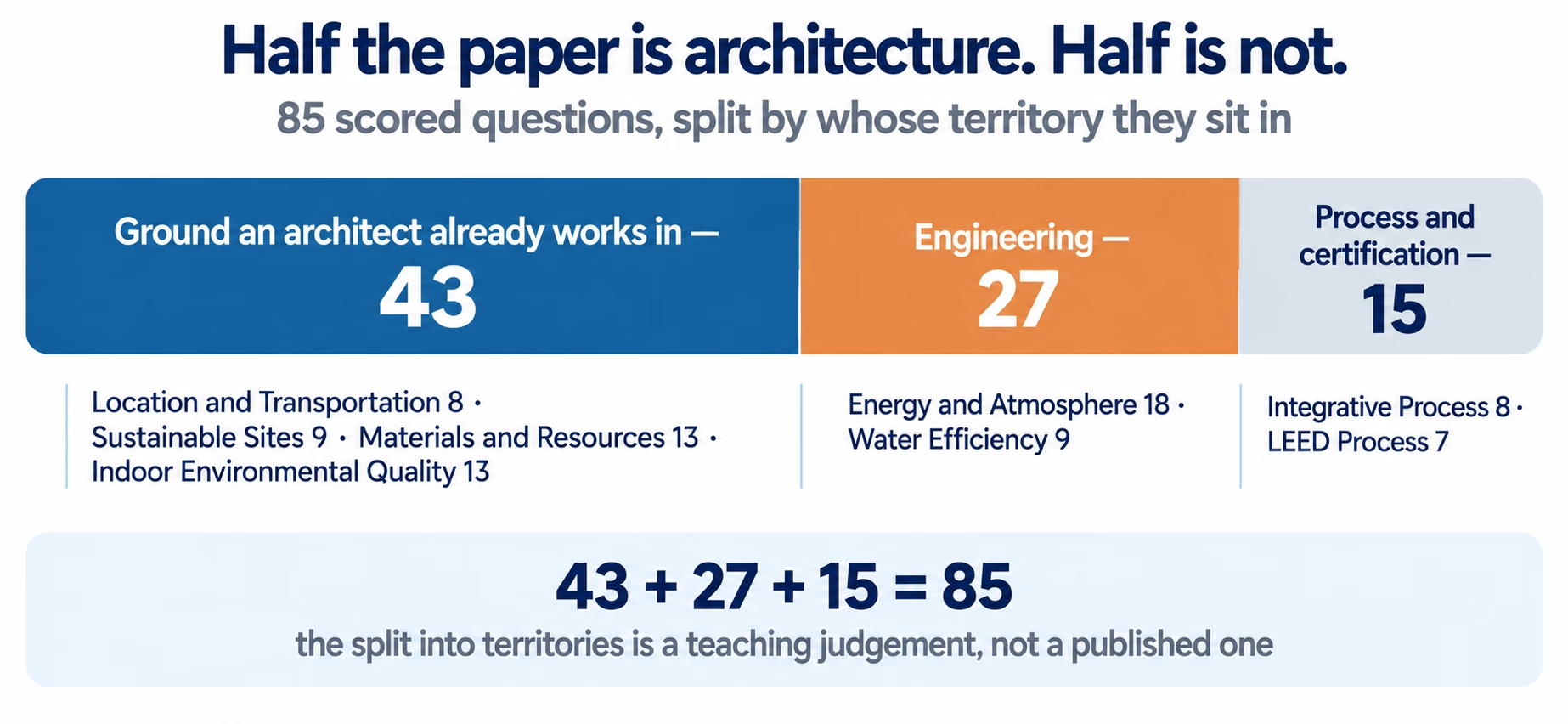
This is where most pages aimed at architects overpromise. The LEED AP BD+C exam includes 100 multiple-choice questions, including 85 scored questions. The current exam specifications organize the content across multiple knowledge and task areas.
Grouping the content by whose day job it most closely relates to — which is our judgement rather than a published classification — can help architects identify where their existing experience is most relevant.
Architects already work with several subjects that appear throughout LEED BD+C, including site, materials, indoor environmental quality and integrated design decisions.
LEED tests its own requirements, documentation rules, compliance approaches and terminology rather than general architectural knowledge alone.
Energy, certification processes and LEED-specific calculations can require more preparation even for experienced practitioners.
Where the familiar ground is less familiar than it looks
Familiarity with a subject is not the same as knowing LEED's version of it, and this is the trap specific to experienced practitioners.
- Materials and Resources is 12 questions and covers the rating system's requirements for materials and resource-related strategies, including the documentation and data needed to demonstrate compliance. Knowing materials well does not answer these.
- Indoor Environmental Quality is 11 questions and covers topics including air quality, thermal comfort, daylight, views, acoustics and other aspects of occupant health and well-being.
- Sustainable Sites depends on an assessment carried out under a different category. You meet the resilience credit already needing to know where its hazards came from.
The detail is in the LEED AP BD+C domain deep dives .
Where the real work is
The largest knowledge domain on the paper, and for many architects one of the less familiar areas.
It is also the one that rewards study most directly, because you are starting from further back and there is more of it than anywhere else.
You are not being asked to become an energy modeller. You are being asked to know what the prerequisites require, what the credit's compliance paths are, and — the part that costs marks — which direction its index reads in, since a lower Performance Index is a better building and almost everything else in LEED reads the other way.
The LEED AP BD+C cheat sheet covers that.
LEED Process is 8 questions covering areas such as LEED process requirements and certification. Integrative Strategies adds 9 more and focuses on the integrated approaches and assessments that support LEED project outcomes.
If you already hold LEED Green Associate
Two things to know. The study delta is set out in from LEED GA to LEED AP — the current LEED AP BD+C exam covers nine knowledge domains, with Energy and Atmosphere carrying the largest share at 14 questions.
Your Green Associate credential expires and is replaced. On a practice's staff list and on your own profile, LEED AP BD+C is what appears, and Green Associate comes off.
Should you sit it?
The case is concrete rather than aspirational: a point on the scorecard that attaches to a person, and you are the person it most naturally attaches to.
The credential does not create demand. Where local schemes dominate, look at what is recognised where you practise before committing the fee and study time.
And note the version question. If your work is interiors rather than whole buildings, or existing buildings rather than new ones, a different specialty may be the right one — see the LEED AP specialties compared . The credit requires a specialty appropriate for the project, so the right specialty is decided by what you build.
Frequently Asked Questions
Should architects get LEED AP BD+C?
If your practice works on LEED projects or wants to bid for them, the case is concrete. The rating system includes a LEED AP credit under which a project can earn a point when at least one principal participant of the project team is a LEED AP with a specialty appropriate for the project.
What is a principal participant on a LEED project?
A principal participant is a member of the project team who qualifies for the LEED AP requirement. Under the LEED AP credit, at least one principal participant must be a LEED AP with a specialty appropriate for the project. These requirements are as taught in our own v5 course material; confirm against the LEED v5 BD+C Rating System before relying on them for a live project.
How much of the LEED AP BD+C exam is already familiar to an architect?
Around a third squarely, and about half if you count the shared domain. An architect will already be familiar with some parts of the LEED AP BD+C exam through professional practice, particularly areas connected to design and construction. However, the exam covers the full range of LEED BD+C requirements, so professional experience alone does not determine exam readiness.
The exact grouping is our teaching judgement rather than a published USGBC classification, and the domain weights themselves are from the exam specification.
Which part of the LEED AP exam is hardest for architects?
Energy and Atmosphere is one of the major content areas of the exam and may be less familiar to architects whose work is focused primarily on design. You are not asked to become an energy modeller, but you do need to understand the applicable prerequisites, compliance approaches and performance concepts covered by the LEED AP BD+C exam.
You need the prerequisites, the compliance paths and the direction the Performance Index reads in, since a lower index is a better building while almost everything else in LEED reads the other way.
Is Materials and Resources easy if you specify materials for a living?
Less than you would expect. Much of the domain is about documentation and data conformance rather than about specifying products, so it asks what a product declaration must conform to and what belongs in a denominator. Knowing materials well is a good start and it does not answer those questions.
Do I keep LEED Green Associate after passing LEED AP BD+C?
No. The specialty credential supersedes it: your Green Associate credential expires and is replaced. On your profile and on a practice's staff list, LEED AP BD+C is what appears and Green Associate comes off. Never write LEED Accredited Professional, and never LEED Certified, which applies to buildings rather than people.
Is LEED AP BD+C the right specialty for an architect?
It depends on what you build rather than on your title. Building Design and Construction covers new construction and major renovations. If your work is interiors, or existing buildings in operation, a different specialty is likely to be the one appropriate for your projects, and the credit requires a specialty appropriate for the project.
How long does an architect need to prepare for the LEED AP BD+C exam?
In our experience about six weeks of consistent evening and weekend study for someone with project exposure, and longer without it. No official study time is published for this exam by anyone. Being familiar with much of the material shortens the reading rather than the practice.
If you want to know whether it fits your practice
3FOLD TRAINING has prepared professionals for certification exams since 2008, across more than 100 countries. Tell us what your practice builds and where, through the course enquiry form , and we will say whether BD+C is the right specialty — including when it is not.
Our LEED AP BD+C training is one route and no course is required to sit or pass the exam, ours included.
Is LEED AP BD+C right for your architectural practice?
Tell us what you design and the type of projects you work on. We will help you identify whether BD+C — or another LEED specialty — fits your work.



Leave a Reply
Your email is safe with us.