
The LEED AP exam runs through Prometric, either at a test centre or as a remotely proctored online exam using the ProProctor application. Arrive or log in 30 minutes early either way. The rules are not the same in the two settings, and the online version is the stricter of the two: no breaks, no paper, and you may not leave the webcam’s view at any point.
The one thing that turns candidates away
Identification, and specifically the name on it.
You need one valid government-issued ID showing:
- Your first and last name, which must exactly match the name you registered with
- A recent, recognisable photograph
- Your signature
- Issue and expiration dates, unexpired
Photocopies, duplicates and digital IDs are not accepted.
The handbook puts EXACTLY in capitals, which is unusual enough to be worth noticing. A middle name on one and not the other, a second surname, an accent, a different transliteration — any of these is a mismatch on the face of it.
Check this well before the day. If the names do not match, that is something to sort out with GBCI while there is still time. See how to register for the LEED AP BD+C exam.
Choosing your room
If you have not booked yet, this section is the decision.
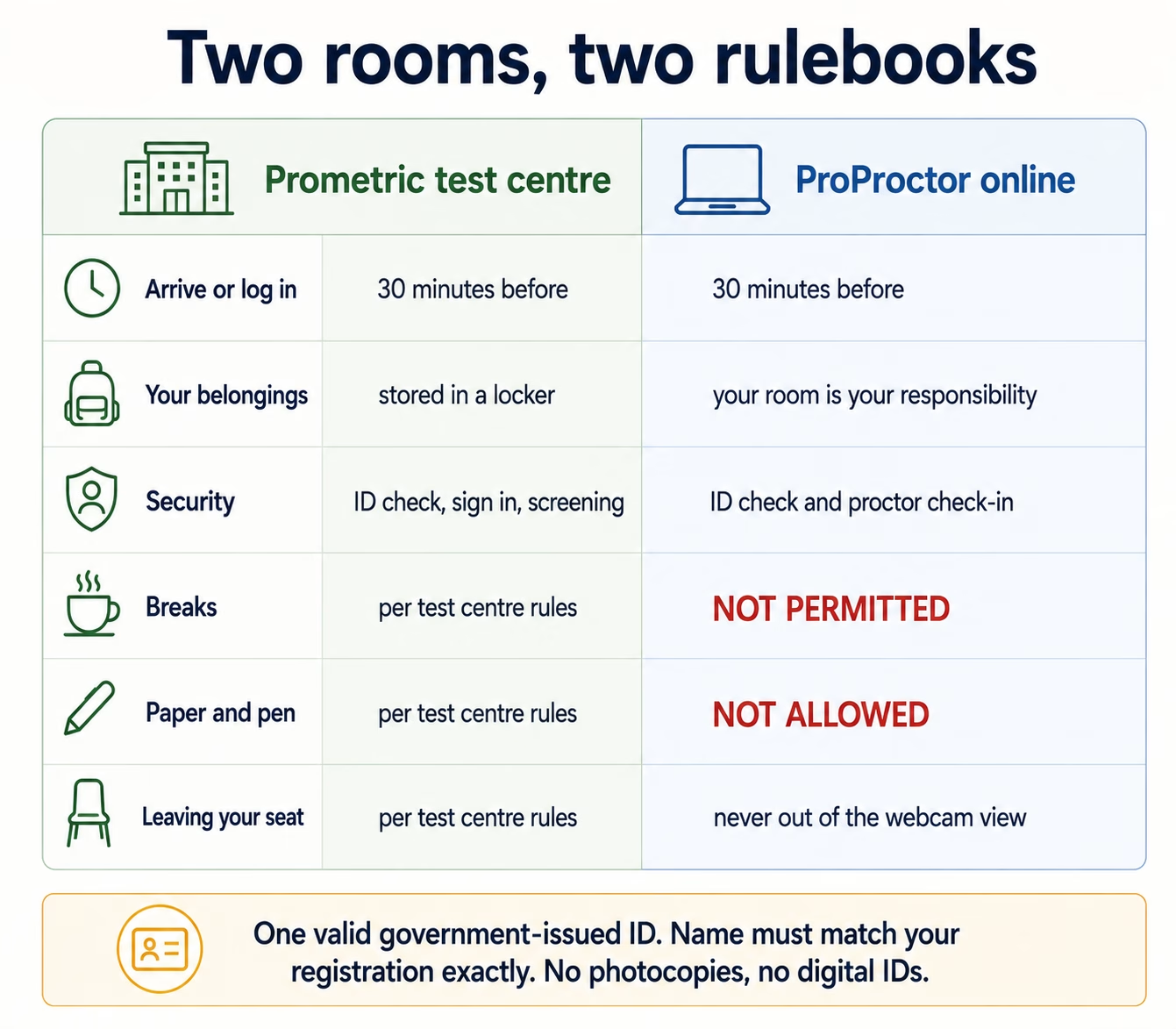
| Prometric test centre | ProProctor online | |
| Arrive or log in | 30 minutes before | 30 minutes before |
| The room | Provided and managed | Yours to prepare and prove |
| Breaks | Check Prometric’s regulations | Not permitted |
| Paper and pen | Check Prometric’s regulations | Not allowed |
| Travel | Required | None |
| What can go wrong | Traffic, ID, arriving late | Connection, room, equipment |
The honest trade: the test centre transfers the environmental risk to Prometric and asks you to travel. Online removes the travel and hands you the risk. Neither is the safer option in general — it depends on whether you can reliably produce a compliant room and connection.
At a Prometric test centre
The handbook’s instruction is to plan to arrive at the test centre at least 30 minutes before your scheduled appointment. Check-in is a process rather than a formality, as the next paragraph describes, so build that margin in.
The handbook describes what happens: you show your identification, sign in, and are escorted to a locker to store your belongings. Security screening follows, and eyeglasses, watches, jewellery and certain items of clothing must be removed for it.
Three practical points that follow from that:
Bring as little as possible. Your belongings are stored in a locker, so the fewer things you have to hand over, the faster check-in runs.
Expect the screening. Being asked to remove a watch or hand over glasses for inspection is routine, not suspicion. Candidates who have not been warned find it unsettling on a morning when they are already tense.
Do not plan around materials being available. Whether scratch paper or a calculator is provided is governed by Prometric’s own test centre regulations, which you should read before the day. We are not going to tell you what will be on the desk, because the AP handbook does not state it and the answer should come from the operator rather than from us.
Taking it online through ProProctor
The rules here are specific and strict, and every one of them is worth reading in advance because several are hard to fix on the day.
Log on 30 minutes before your scheduled appointment.
What is prohibited:
| Breaks | Not permitted at any point during the exam |
| Paper and pen | Scratch sheets of paper and a pen or pencil are not allowed |
| Leaving the webcam’s view | Strictly prohibited at any point |
| Computer-sharing programs | Must all be closed. Use is strictly prohibited |
| Dual monitors | Prohibited |
| Desktop monitors with built-in cameras | Prohibited |
| Bluetooth headsets | Prohibited |
An Ethernet cable connection is recommended rather than wireless.
The three that catch people
1.No breaks, at all. The handbook is unambiguous: breaks are not permitted during remotely proctored online exams. Two hours in a chair with no interruption, so plan the practical consequences in advance — hydration, coffee timing, everything.
2.No paper. If your method involves sketching a scorecard, jotting a calculation, or writing down the numbers in a question stem, that method does not survive the online format. If you are taking it online, practise without paper. Discovering the habit mid-exam is a real handicap.
3.Never out of shot. Not to stretch, not to fetch water, not to answer the door. Tell whoever else is in the building, and put a note on the door.
Preparing the room
The obligations transfer to you, so treat the room as a task rather than an assumption:
1.A space where you will not be interrupted for the full appointment
2.A laptop or desktop that meets the requirements, without a built-in-camera desktop monitor and with only one screen connected
3.All computer-sharing programs closed — check what launches automatically at startup
4.An Ethernet connection if you can manage one
5.Whatever readiness check ProProctor asks of you, done in advance rather than 30 minutes before
Do that on the machine you will actually use, in the room you will actually use. A check passed on a different laptop in a different room has told you very little.
The exam itself
100 multiple-choice questions in a two-hour period, with a tutorial alongside, so the appointment runs longer than the question time. One correct answer per question. 85 questions are scored and 15 are unscored trial items placed at random, and you are not told which is which — so answer everything. Full detail in the LEED AP BD+C exam format.
Two hours across 100 questions leaves little room for stalling. Mark and move on rather than fighting a question you cannot place.
When you finish
Your score appears on screen at the end of the session. You will know before you stand up.
A score report is emailed to your registered address within 24 hours. If you passed, GBCI’s guidance is that credential accounts update within 72 hours.
What the score means, and why 170 is not a percentage, is in the LEED AP BD+C passing score. If it did not go your way, failed the LEED AP exam sets out the rules and what to do next.
The night before, in five lines
1.Identification located, unexpired, and the name checked against your registration
2.Route and travel time confirmed, or the room prepared and the system check already passed
3.30 minutes’ margin built into the plan
4.If online: nobody will interrupt you, and you have practised without paper
5.Nothing new studied — the marginal value of one more hour tonight is lower than the cost of arriving tired
Frequently asked questions
What do I need to bring to the LEED AP exam?
One valid, unexpired government-issued ID showing your first and last name exactly as registered, a recent recognisable photograph, your signature, and issue and expiration dates. Photocopies, duplicates and digital IDs are not accepted.
How early should I arrive for the LEED AP exam?
30 minutes before your scheduled appointment, whether you are attending a Prometric test centre or logging on to the ProProctor application for a remotely proctored exam.
Can I take a break during the LEED AP exam?
Not during a remotely proctored online exam: the handbook states that breaks are not permitted. For a test centre sitting, check Prometric’s own test centre regulations.
Can I use scratch paper in the LEED AP exam?
Not in the remotely proctored online exam, where scratch sheets of paper and a pen or pencil are not allowed. For a test centre, check Prometric’s test centre regulations before the day.
What is prohibited in the online LEED AP exam?
Breaks, scratch paper and pen, leaving the webcam’s field of vision at any point, computer-sharing programs, dual monitors, desktop monitors with built-in cameras, and Bluetooth headsets. An Ethernet cable connection is recommended.
What happens at a Prometric test centre?
You show your identification, sign in, and are escorted to a locker to store your belongings. Security screening follows, and eyeglasses, watches, jewellery and certain items of clothing must be removed for it.
Should I take the LEED AP exam online or at a test centre?
A test centre transfers the environmental risk to Prometric and asks you to travel. The online option removes the travel and makes the room, the machine and the connection your responsibility. Choose on whether you can reliably produce a compliant room and connection.
When do I find out if I passed?
Your score appears on screen at the end of the exam session, and a score report is emailed to your registered address within 24 hours.
Walking in prepared
3FOLD TRAINING has prepared professionals for certification exams since 2008, across more than 100 countries. Our LEED AP BD+C training includes timed practice, which is the part that makes the two-hour limit feel manageable rather than sudden. No course is required to sit or pass the exam, ours included. Ask through the course enquiry form.



Leave a reply