
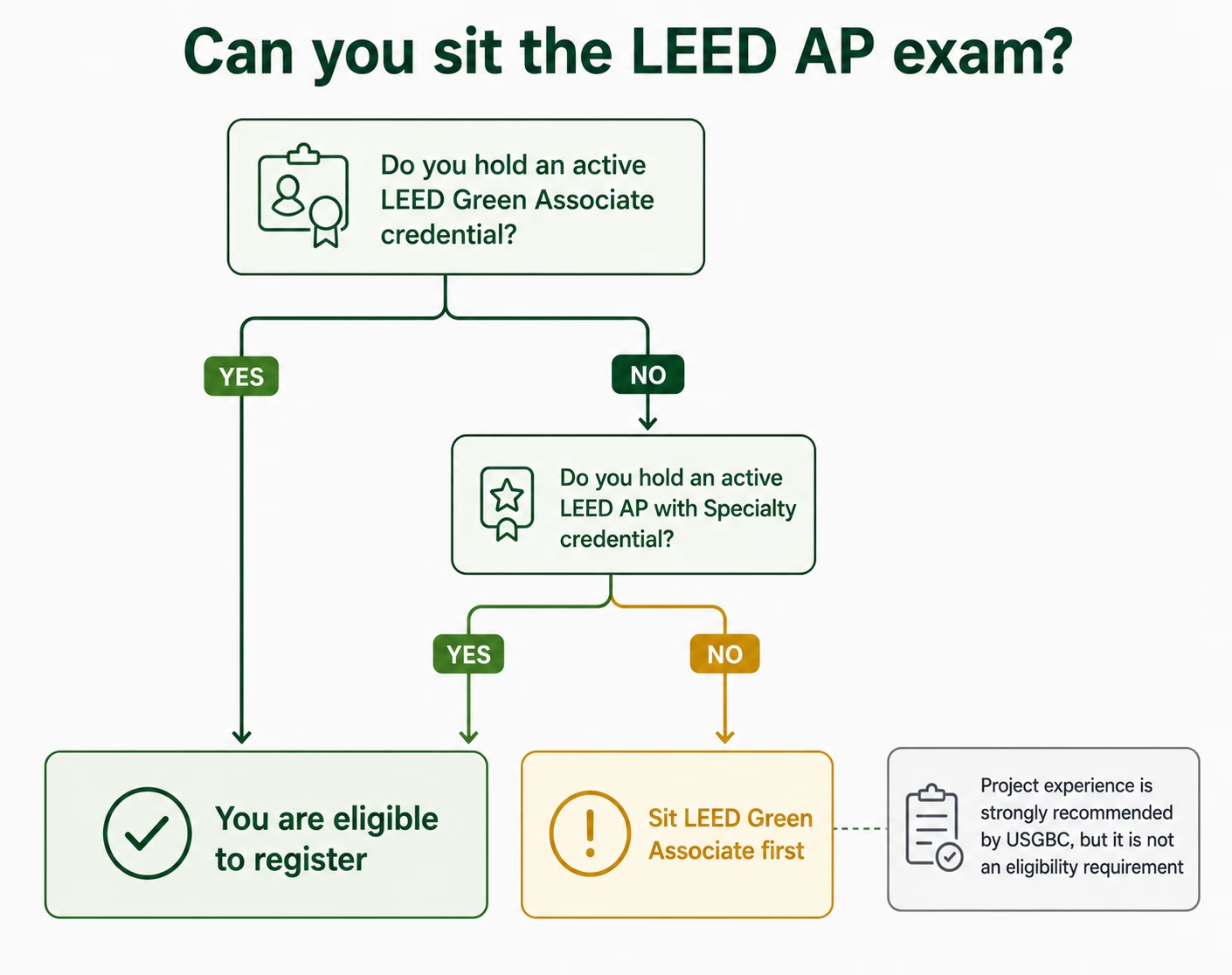
There are two eligibility requirements for the LEED AP with Specialty exam: you must be 18 years of age or older and hold an active LEED Green Associate credential or active LEED AP with Specialty credential at registration and maintain its active status through the date of the exam. That is the whole gate. Project experience is strongly recommended by USGBC, and it is not required.
The one hard requirement
The current USGBC eligibility guidance states that to be eligible you must be 18 years of age or older and hold an active LEED Green Associate credential or active LEED AP with Specialty credential at registration and maintain its active status through the date of the exam.
Three things follow from that wording, and each catches somebody out.
“Active” means active. A LEED Green Associate credential that has lapsed does not satisfy the requirement. If yours has lapsed, that is what to fix first — see how to maintain your LEED Green Associate credential.
The credential must be active when you register and remain active through the date you take the exam. Passing Green Associate and registering for AP the same week is fine; registering for AP first and intending to pick up Green Associate along the way is not.
An existing LEED AP with Specialty also qualifies you. If you already hold one specialty and want a second, you do not need to go back through Green Associate. Your AP credential is itself the key.
What is not required
This is where the confusion sits, so here it is plainly. None of the following is an eligibility requirement:
| A degree | Not required |
| A professional licence or chartership | Not required |
| A minimum number of years in the industry | Not required |
| Employment in a particular role | Not required |
| A training course — ours or anyone’s | Not required |
| LEED project experience | Strongly recommended by USGBC. Not required. |
That last row deserves its own treatment rather than a line in a table — the handbook’s exact wording, what “strongly recommended” is actually telling you, and what to do if you have none. That is in do you need LEED project experience for the AP BD+C exam.
Which specialty you are becoming eligible for
LEED AP is not a single credential. The handbook lists five specialties:
| Specialty | What it covers |
| LEED AP BD+C | Buildings — new construction and major renovations |
| LEED AP ID+C | Interior Design and Construction |
| LEED AP O+M | Operations and Maintenance |
| LEED AP Homes | Residential projects under the LEED Homes rating system |
| LEED AP ND | Neighborhood Development |
The eligibility requirement is the same for all five. Choosing between them is a separate question, and a consequential one — see which LEED AP specialty should you choose.
The combined exam question
Candidates often ask whether Green Associate and a specialty can be sat together.
The handbook states that the LEED v5 beta exams are not available in a combined format. If you were planning on that, check the current position in the handbook before making plans around it — this is exactly the kind of arrangement that changes between versions. Version-related changes are covered in LEED AP BD+C v5 exam changes.
The audit clause worth knowing about
One line in the handbook is easy to miss, and it is worth reading before you fill in an application.
GBCI “reserves the right to conduct an audit at any time (including prior to application submission and after credential has been granted) of all current and past exam applications.”
Read that carefully. The audit right extends to applications already submitted and to credentials already granted. It is not a pre-exam checkpoint you clear and forget.
What it means for you is straightforward: be accurate on your application. Do not overstate a role on a project, do not claim experience you do not have, and do not describe yourself as having done work you observed. Since the exam does not require project experience, there is nothing to be gained by inventing any — and the handbook’s wording makes clear that an application does not stop being reviewable once a credential has been granted.
What being eligible does not tell you
Eligibility and readiness are different questions, and the LEED AP with Specialty Candidate Handbook is careful about the distinction. It says prior LEED project experience is strongly recommended and that “practitioner experience is critical to earning the credential” — language that is about passing, not about permission.
So: you are allowed to sit this exam the day after you pass Green Associate, with no project experience at all. Whether that is a good idea depends on how you intend to prepare, and it is a real question rather than a rhetorical one. Both sides of it are set out in passing LEED AP BD+C without LEED project experience.
If you are not yet eligible
If you do not hold Green Associate, that is the step in front of you, and it is a smaller one than it looks. Green Associate has no prerequisites of its own — anyone can sit it, and candidates under 18 need parental consent.
It is also not wasted effort on the way to AP. The two exams are specified across the same nine knowledge domains, weighted differently, so Green Associate study is AP foundation rather than a detour. How much of it carries over, domain by domain, is set out in from LEED GA to LEED AP.
Start with what the LEED Green Associate credential is and the LEED Green Associate requirements.
Frequently asked questions
What are the requirements to take the LEED AP exam?
One: you must hold an active LEED Green Associate credential upon exam registration, or an active LEED AP with Specialty credential. There is no degree, licence, years-of-experience or training-course requirement.
Do I need LEED Green Associate before LEED AP?
Yes, unless you already hold a LEED AP with Specialty credential, which also makes you eligible. The Green Associate credential must be active at the point you register, not merely at the point you sit the exam.
Is LEED project experience required for the LEED AP exam?
No. The LEED AP with Specialty Candidate Handbook says prior LEED project experience is strongly recommended and that practitioner experience is critical to earning the credential, but it is not an eligibility requirement.
Can I take LEED Green Associate and LEED AP together?
The LEED AP with Specialty Candidate Handbook states that the LEED v5 beta exams are not available in a combined format. Check the current position in the handbook rather than relying on any summary.
How many LEED AP specialties are there?
Five: BD+C for buildings including new construction and major renovations, ID+C for interior design and construction, O+M for operations and maintenance, Homes for residential projects, and ND for neighborhood development.
Do I need a degree or a licence to become a LEED AP?
No. Neither a degree nor a professional licence nor any minimum period in the industry is an eligibility requirement.
Can GBCI check my application after I pass?
Yes. GBCI reserves the right to conduct an audit at any time, including prior to application submission and after a credential has been granted, of all current and past exam applications. Be accurate on your application.
What if my LEED Green Associate credential has lapsed?
It must be active at registration, so a lapsed credential has to be dealt with before you can register for the AP exam. Both LEED credentials are maintained by earning and reporting continuing education hours within each two-year reporting period.
Preparing for the AP exam
3FOLD TRAINING has prepared professionals for certification exams since 2008, across more than 100 countries. Our LEED AP BD+C training and LEED Green Associate training run online and in person, for individuals and for project teams. No course is required to sit either exam — ours included. Ask through the course enquiry form.





Leave a reply