

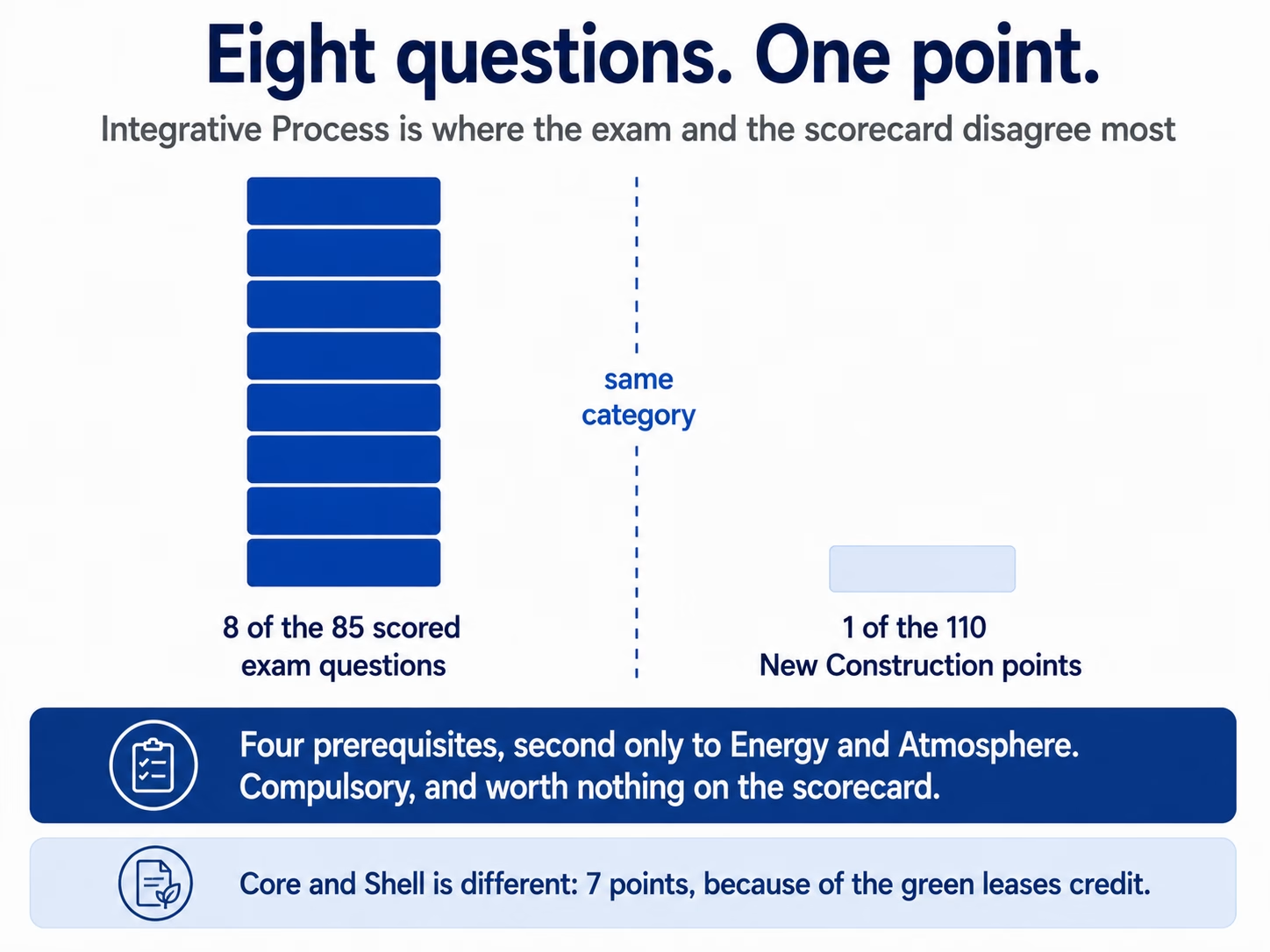
Integrative Process, Planning and Assessments is 8 of the 85 scored questions and one point for a New Construction project. Measured as a ratio, no category diverges further between the two, and it means a candidate who allocates study time by points will badly under-prepare a domain worth nearly a tenth of the scored questions. It also carries four prerequisites, three of which apply to a New Construction project, and every one of them is compulsory and worth nothing.
Eight questions, one point
| 8 of the 85 scored questions | Nearly a tenth of the scored questions |
| 1 point New Construction | 7 for Core and Shell — see below |
| Four prerequisites | Three of which apply to New Construction; the fourth is Core and Shell only |
| Five sub-topics | The fewest of any domain, for eight questions |
Why the mismatch? Because the exam is testing a way of working, not a credit. The rating system pays a project one point for running an integrative design process. The exam wants to know whether you understand what assessments a project must do before design is fixed, what they feed, and what happens downstream when they are skipped.
That is a competence, not a line on a scorecard. It takes up nearly a tenth of the scored questions and under one per cent of the points.
Core and Shell is a different picture: 7 points, because of a green leases credit that New Construction does not have. This is one of only two categories worth more for Core and Shell — the other is Materials and Resources. The comparison is in LEED AP BD+C credit categories.
Five sub-topics
| Integrative design process | Timing, engagement, interdisciplinary collaboration, assessment-based understanding, the design charrette, discovery, LEED goal setting |
| Core and Shell, where applicable | Tenant guidelines and green leases |
| Climate resilience | Site-specific natural hazards |
| Human use, health impact and social context | Cultural awareness, historic and heritage awareness, community engagement |
| Carbon assessment | Operational, embodied, transportation, refrigerants, product selection, long-term direct and indirect emissions |
Five lines, eight questions. Only Energy and Atmosphere packs more questions into each sub-topic, and Energy and Atmosphere has 18 questions to spread across nine. With five lines and eight questions, there is not much room to skip one.
The four prerequisites
All compulsory. All worth nothing. Collectively they are what the domain is really about.
| Prerequisite | What it requires |
| Climate Resilience Assessment | Assess current and future hazards, and identify priority hazards to design for |
| Human Impact Assessment | Assess across social categories. Assess-and-inform only — there is no performance threshold to hit |
| Carbon Assessment | A long-horizon projection drawing on prerequisites and credits in other categories |
| Tenant Guidelines | Core and Shell only. Guidelines issued to tenants before lease signing, with features, guidance and a named contact |
The Human Impact Assessment is the one to be careful with. It is an assessment obligation, not a performance obligation. A project must do the work and report it; it does not have to achieve a number, and there is no threshold to hit.
The tenant guidelines timing is the other. Before lease signing, not after. A Core and Shell project that issued excellent guidelines to tenants already under contract has not satisfied it.
The connective tissue
This is the part that makes the eight questions make sense.
The Climate Resilience Assessment feeds Sustainable Sites. The hazards it identifies are what the Enhanced Resilient Site Design credit is scored against. No assessment, no credit — and the credit is all or nothing. See Sustainable Sites.
The Carbon Assessment draws on three other categories. It pulls from Energy and Atmosphere prerequisites, a Materials and Resources prerequisite, and a Location and Transportation credit — the last only where that credit is being pursued. It is a synthesis, not a standalone exercise.
Read those two together and the domain’s real subject appears: Integrative Process is where LEED v5 makes the categories talk to each other. An exam that tests project proficiency is going to ask about that, and one point on a scorecard was never going to reflect it.
The credits
| Credit | NC | CS | What it rewards |
| Integrative Design Process | 1 | 1 | A charrette in predesign, with the owner and several key perspectives, and the goals carried into the owner’s project requirements |
| Green Leases | — | 6 | Core and Shell only. Lease terms that align landlord and tenant on performance |
| Total | 1 | 7 |
Point allocations as taught in our LEED AP BD+C v5 course material. Confirm against the LEED v5 BD+C Rating System before relying on them for a live project.
Two things about the design process credit. The charrette must happen in predesign — a workshop held after the scheme is settled is a meeting, not a charrette. And the outcome has to land somewhere: goals go into the owner’s project requirements, which is the document the rest of the certification is measured against.
Green Leases is the reason Core and Shell is worth seven. It is a six-point credit that exists only in that rating system, and it rewards lease terms rather than anything built.
Where candidates lose marks
1.Skipping the domain because it is worth one point. The single most costly mistake available in this category, and it is made at the planning stage rather than in the exam room.
2.Treating the Human Impact Assessment as a performance requirement. It is assess-and-inform.
3.Missing that the charrette has a timing requirement. Predesign. Not early design, not concept sign-off.
4.Forgetting which prerequisites feed which credits. This is the domain where cross-category questions are written, because this is the category that connects.
5.Ignoring the Core and Shell column. One point becomes seven. If a scenario names Core and Shell, this category has changed shape entirely.
A revision checklist for this domain
1.Name all four prerequisites and say which is Core and Shell only.
2.Say which prerequisite is assess-and-inform with no performance threshold.
3.Explain what the Climate Resilience Assessment feeds, and in which category.
4.Name the categories the Carbon Assessment draws on.
5.State the timing requirement for tenant guidelines, and for the charrette.
6.Say where the goals from the charrette have to end up.
7.State the New Construction and Core and Shell totals and explain the difference.
8.Name all five sub-topics.
Then practise it
Work through Integrative Process practice questions against the clock. Because this domain connects to others, its questions often look like questions about somewhere else — which is the point.
Frequently asked questions
How many questions on Integrative Process are in the LEED AP BD+C exam?
8 of the 85 scored questions, drawn from five sub-topics. That is the fewest sub-topics of any domain, so the questions are concentrated across a small number of subjects.
Why is Integrative Process worth only one point?
For New Construction it is one point, because the rating system awards a single credit for running an integrative design process. The exam weights it at 8 of 85 because it is testing a way of working rather than a credit: what assessments a project must complete before design is fixed, what they feed, and what happens when they are skipped.
How many points is Integrative Process for Core and Shell?
7 points, because Core and Shell has a green leases credit worth 6 that New Construction does not. It is one of only two categories worth more for Core and Shell, the other being Materials and Resources. Confirm against the LEED v5 BD+C Rating System before relying on this for a live project.
What are the Integrative Process prerequisites?
Four: a Climate Resilience Assessment, a Human Impact Assessment, a Carbon Assessment, and, for Core and Shell only, Tenant Guidelines. A New Construction project therefore has three. None of them earns points.
Does the Human Impact Assessment have a performance threshold?
No. It is an assessment-and-inform obligation: the project must do the work and report it, without having to achieve a particular number.
What does the Climate Resilience Assessment feed?
The priority hazards it identifies are what the Enhanced Resilient Site Design credit in Sustainable Sites is scored against. That credit is all or nothing, so a project that treated the assessment as paperwork cannot earn it.
When must the integrative design charrette happen?
In predesign, with the owner and several key perspectives represented, and the goals agreed there have to be carried into the owner’s project requirements. A workshop held after the scheme is settled does not satisfy the credit.
When must Core and Shell tenant guidelines be issued?
Before lease signing. A project that issued guidelines to tenants already under contract has not met the prerequisite.
The domain easiest to under-prepare
3FOLD TRAINING has prepared professionals for certification exams since 2008, across more than 100 countries. Our LEED AP BD+C training allocates time to this domain by its exam weight rather than its point value, which is the whole argument of this page. No course is required to sit or pass the exam, ours included. Ask through the course enquiry form.



Leave a reply