
Water Efficiency is 9 of the 85 scored questions and 9 points for New Construction. It is a lopsided category: two prerequisites, only two credits, and one of those credits carries 8 of the 9 points. But the exam works from eight sub-topics. Study the scorecard and you will prepare for one credit; the exam will ask you about irrigation, fixtures, process water, water quality, reuse, whole-project water use, metering and leak detection.
The shape of the domain
| 9 of the 85 scored questions | Across eight sub-topics |
| 9 points New Construction | 8 for Core and Shell |
| Two prerequisites, two credits | Fewer credits than most categories carry |
| One credit carries 8 of the 9 points | Enhanced Water Efficiency |
A note on the 9 and 9. Nine scored questions and nine points is a coincidence, not an alignment — the two numbers count different things. Indoor Environmental Quality does the same at 13 and 13, and no other category coincides. Check Energy and Atmosphere at 18 and 33 and the idea collapses. The distinction is explained in LEED AP BD+C credit categories.
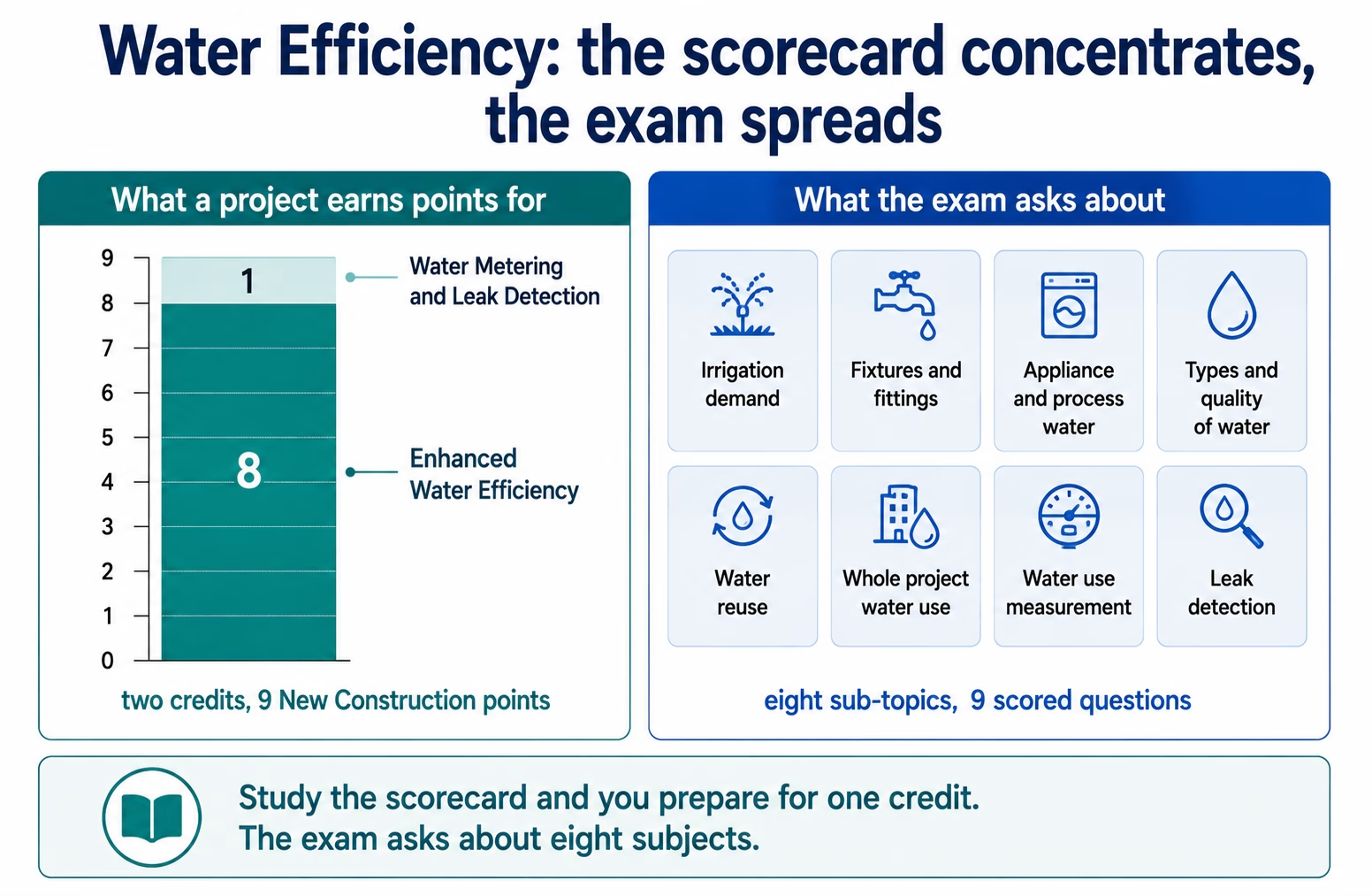
The scorecard concentrates, the exam spreads
This is the structural fact to carry into your revision, because it changes the method.
On the scorecard, Water Efficiency is almost a single decision: how far beyond the minimum does the project push its water performance? That one credit is 8 of 9 points, and the rest is a metering credit worth one.
On the exam specification, the same category is eight separate lines — irrigation demand, fixtures and fittings, appliance and process water, types and quality of water, water reuse, whole-project water use, measurement, and leak detection.
Nine questions spread across eight subjects means roughly one question each. There is no room for depth and no reward for it. What there is reward for is being able to say what each of the eight is about, and not being caught out by the one you skipped.
Eight sub-topics
| Irrigation demand | Landscape water requirement, irrigation efficiency, native and adaptive species |
| Fixtures and fittings | Prescriptive versus performance path; toilets, urinals, showerheads, kitchen and lavatory taps |
| Appliance and process water | Cooling towers, washing machines, commercial kitchen equipment |
| Types and quality of water | Potable, non-potable, alternative sources |
| Water reuse | Reclamation and alternative sources |
| Whole-project water use | A holistic view rather than fixture-by-fixture |
| Water use measurement | Meters and submeters, which sources to measure, data management |
| Leak detection | Leak detection sensors |
Two of those eight are about measuring rather than saving. Metering and leak detection are examined as subjects in their own right, not as a footnote to efficiency — and one of the two prerequisites is about metering.
The two prerequisites
| Prerequisite | The thing to know |
| Water Metering and Reporting | Meter both potable and alternative water, and commit to sharing the data for a period of years. The reporting obligation, not the meter, is the part candidates forget |
| Minimum Water Efficiency | Either prescriptive maximums or an aggregate reduction — and equipment water and outdoor water. Three limbs joined by and, with a choice only inside the first |
The second one is where the exam sets its trap. A project may choose between a prescriptive route and a performance route for fixtures. It may not choose between fixtures, equipment and outdoor water — all three must be satisfied. “The project met the prescriptive fixture maximums” is not the prerequisite.
The two credits
| Credit | NC | CS | What it rewards |
| Enhanced Water Efficiency | 8 | 7 | Performance beyond the prerequisite, on a ladder of increasing reduction — or one of several alternative options |
| Water Metering and Leak Detection | 1 | 1 | Submetering indoor fixtures, or leak sensors on flush fixtures |
| Total | 9 | 8 |
Point allocations as taught in our LEED AP BD+C v5 course material. Confirm against the LEED v5 BD+C Rating System before relying on them for a live project.
The structure of Enhanced Water Efficiency is the examinable part. It offers a ladder of increasing reduction, in steps, or a set of alternative options.Enhanced Water Efficiency offers two approaches: Option 1, Whole-Project Water Use, or any combination of Options 2–6. A project cannot combine Option 1 with Options 2–6, but Options 2–6 may be combined, subject to the credit’s individual requirements and the overall point maximum.
The metering credit is an or in the other direction: submeters on a proportion of indoor fixtures, or leak sensors on a proportion of flush fixtures. Either satisfies it.
Where candidates lose marks
1.Combining the ladder with the alternatives. Covered above and worth repeating, because the wrong answer looks generous rather than wrong.
2.Reading the prerequisite as fixtures only. Equipment water and outdoor water are part of it. A project can have excellent taps and fail.
3.Forgetting the reporting commitment. The metering prerequisite is not satisfied by installing a meter. It commits the project to sharing data over time.
4.Muddling potable, non-potable and alternative water. These are distinct categories with distinct consequences, and one of the eight sub-topics is devoted to them. A question that swaps two of the three is testing whether you noticed.
5.Studying by points. Spend all your time on the eight-point credit and a question about cooling tower water, a leak sensor threshold or the definition of an alternative source has nowhere to come from. Nine questions, eight subjects.
A revision checklist for this domain
1.Name both prerequisites and every limb of each.
2.State both credits and their New Construction and Core and Shell points.
3.Explain the two routes inside Enhanced Water Efficiency and why they cannot be combined.
4.State the two alternative ways to satisfy the metering and leak detection credit.
5.Distinguish potable, non-potable and alternative water, and say where each may be used.
6.Say what the metering prerequisite commits a project to beyond installing meters.
7.Name all eight sub-topics. Not in detail — just name them.
8.That last item is the one that pays here. In a category with nine questions and eight subjects, coverage beats depth.
Then practise it
Work through Water Efficiency practice questions against the clock, and note which sub-topic your wrong answers sit in. The neighbouring site category is Sustainable Sites, and rainwater sits there rather than here — a boundary worth being clear about.
Frequently asked questions
How many questions on Water Efficiency are in the LEED AP BD+C exam?
9 of the 85 scored questions, drawn from eight sub-topics.
How many points is Water Efficiency in LEED v5 BD+C?
9 points for New Construction and 8 for Core and Shell, as taught in our LEED AP BD+C v5 course material. Confirm against the LEED v5 BD+C Rating System before relying on it for a live project.
Why does Water Efficiency have so few credits?
It has two prerequisites and only two credits, and one of those credits carries 8 of the 9 New Construction points as taught in our course material. The exam nonetheless works from eight sub-topics, so the scorecard concentrates while the exam spreads.
What is the largest credit in Water Efficiency?
Enhanced Water Efficiency, at 8 points for New Construction and 7 for Core and Shell as taught in our LEED AP BD+C v5 course material. It offers a ladder of increasing water reduction or a set of alternative options, and a project takes one route rather than combining them. Confirm point values against the LEED v5 BD+C Rating System.
What does the Water Efficiency metering prerequisite require?
Metering both potable and alternative water, and committing to share the data over a period of years. Installing a meter alone does not satisfy it, because the reporting obligation is part of the requirement.
Does the minimum water efficiency prerequisite cover only fixtures?
No. It covers fixture performance, equipment water and outdoor water, all of them. The choice between a prescriptive route and a performance route applies within the fixture requirement, not to whether the other two apply.
Is rainwater management part of Water Efficiency?
No. Rainwater management is a Sustainable Sites credit. Water Efficiency deals with the water a building uses; Sustainable Sites deals with the water that falls on the site.
Covering the whole domain
3FOLD TRAINING has prepared professionals for certification exams since 2008, across more than 100 countries. Our LEED AP BD+C training teaches this category by sub-topic rather than by credit, which is the distinction that matters when nine questions cover eight subjects. No course is required to sit or pass the exam, ours included. Ask through the course enquiry form.



Leave a reply