
Water Efficiency is 9 of the 100 questions on the LEED Green Associate exam. It covers outdoor water use, indoor water use and water performance management.
If you are short of revision time and need marks quickly, this is the domain to attack. There is very little to reason about and a great deal to simply know.
Why LEED treats water the way it does
Three reasons, and questions are written from all three.
Scarcity. Demand and drought are rising in many regions, and water availability is now a design constraint rather than an assumption in much of the world.
Energy. Treating, pumping, heating and disposing of water can consume energy and contribute to greenhouse gas emissions. Reducing water use—especially hot-water use—can therefore provide both water and energy benefits.
Cost and risk. An efficient building costs less to run and is less exposed to restrictions, tariff changes and supply interruptions.
The order LEED rewards
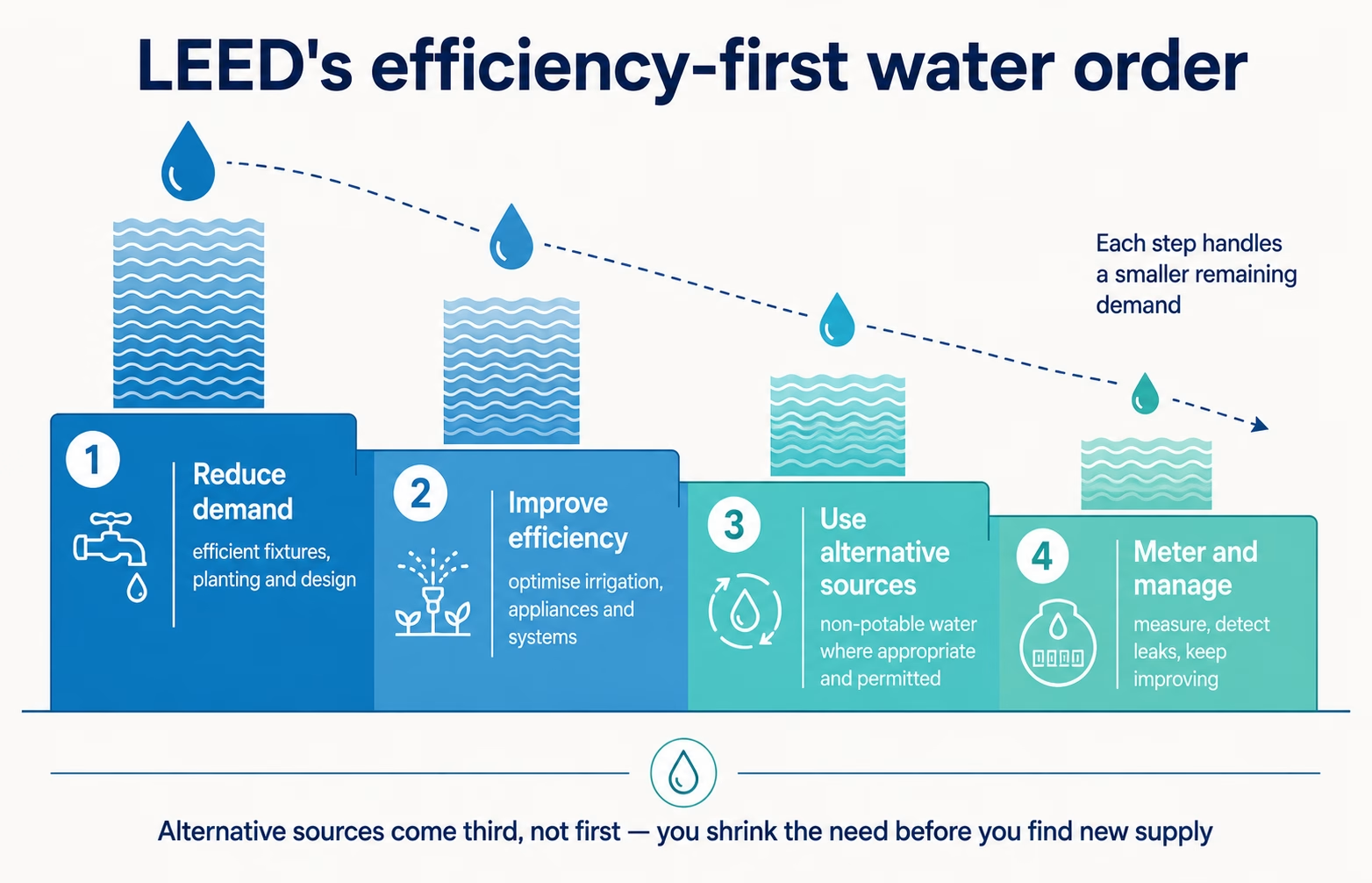
Almost every scenario question in this domain is a test of whether you know the sequence. Learn it as a sequence, not as a list of strategies.
- Reduce demand. Cut the need for water first — efficient fixtures, low-water planting, design that avoids the demand altogether.
- Improve efficiency. Optimise how the remaining water is delivered and used — irrigation systems, appliances, building systems.
- Use alternative sources. Apply non-potable water where it is appropriate and permitted, to meet what is left.
- Meter and manage. Measure use, detect leaks and keep improving.
The trap is an answer option that puts rainwater harvesting or graywater reuse first. It sounds impressive and it is out of order. You shrink the need before you go looking for new supply — otherwise you are sizing an expensive alternative-source system to serve demand you should have designed out.
Water types — the vocabulary the exam tests
Learn these four precisely. Definitional questions here are free marks and are frequently missed for the sake of a careless read.
| Type | Definition |
| Potable water | Water that meets or exceeds applicable drinking-water quality standards and is approved for human consumption by the authority having jurisdiction. |
| Non-potable water | Water that does not meet drinking-water standards but is usable for appropriate purposes such as irrigation or flushing |
| Graywater | Untreated household wastewater that has not come into contact with toilet waste. It commonly includes water from showers, bathtubs, bathroom sinks and clothes washers, but the exact definition may vary by jurisdiction. |
| Blackwater | Wastewater from toilets, and generally from kitchen sinks — requires the highest level of treatment |
Wastewater generally refers to water discharged from building uses or processes that requires treatment or disposal. Graywater and blackwater are categories distinguished by their sources and characteristics, and definitions can vary by applicable codes and standards.
One qualification that belongs in your answer to any reuse question: reuse follows local code. What may be collected, treated and reused, and for what purpose, is set by the jurisdiction, and it varies enormously. LEED never overrides local plumbing law.
Outdoor water: the landscape decides the demand
Irrigation is often the largest single water use on a site, and it is decided by planting choices made long before any irrigation system is specified.
Native and adapted plants are species that are suited or well adapted to the local environmental conditions. Appropriate plant selection can reduce irrigation requirements, although actual water needs depend on the species, site conditions and establishment period.
Xeriscaping is a landscape-design approach that reduces irrigation requirements through appropriate plant selection, efficient landscape design and water-conservation practices. It is not simply a landscape of gravel or a landscape with no plants.
Reducing extensive turf areas can reduce outdoor irrigation demand, particularly where turf has higher water requirements than appropriately selected landscape vegetation for the local climate.
Only once demand is low does irrigation technology earn its place. Smart irrigation means drip systems that deliver water at the root rather than into the air, and weather-based controllers that skip a cycle when it has rained or when evapotranspiration is low. Non-potable sources — harvested rainwater, treated graywater, treated municipal effluent — then serve the smaller remaining need, where local code permits.
Indoor water: fixtures, fittings and two rates
High-efficiency fixtures conserve water while still meeting user needs — low-flow or, in some cases, waterless. The qualification matters: a fixture that saves water but performs so poorly that occupants flush twice has saved nothing.
Then the distinction the exam reliably tests:
| Rate | Measured | Applies to |
| Flush rate | Water used per flush or use | Fixtures — toilets and urinals |
| Flow rate | Water used per unit of time | Fittings — faucets, showerheads, sprayers |
The memory hook: a flush is a single event, so it is measured per event. A tap runs, so it is measured per minute.
Efficient appliances — dishwashers, clothes washers, commercial equipment — carry the same logic into the things plugged into the plumbing rather than built into it.
Process water: the demand people forget
Process water is water used for building systems, equipment or processes, such as cooling systems, boilers, commercial kitchen equipment, laundry and other process-related uses. Its significance varies by project type and operating conditions.
A cooling tower rejects heat from a building’s cooling system by evaporating water. Because the water evaporates, it must be continuously replaced with make-up water, and a single large tower can consume more water than every washroom in the building combined.
The strategies at Green Associate level are efficient operation, water treatment, monitoring cycles of concentration — how many times the water is recirculated before it is drained and replaced — and avoiding once-through cooling, which uses water a single time and discards it. Once-through cooling is the wrong answer whenever it appears.
Measure it or you cannot manage it
Water meters measure the flow of water to a project. Water submeters break that total down by individual system or end use — irrigation, cooling tower, washrooms, kitchen — which is what makes the total actionable.
A water-end-use profile is a summary identifying the most significant uses of water in a project. It is the deliverable that tells a facilities team where the water actually goes, and it usually contradicts what everyone assumed. It also enables leak detection: an unexplained baseline flow at three in the morning is a leak, and it is invisible without submetering.
Under LEED v5, measurement is not an optional refinement. The rating system’s emphasis on demonstrated performance rather than predicted performance runs through the water domain as much as the energy domain.
Key terms to memorise
| Term | Definition the exam expects |
| Potable water | Water that meets applicable drinking-water quality standards and is approved for human consumption by the relevant authority. |
| Non-potable water | Water not meeting drinking standards but usable for appropriate purposes |
| Graywater | Untreated household wastewater that has not come into contact with toilet waste; the exact definition can vary by jurisdiction. |
| Blackwater | Wastewater containing urine or fecal matter. Treatment and reuse requirements depend on applicable codes and health requirements. |
| Wastewater | Water discharged from building uses or processes that requires treatment or disposal. |
| Xeriscaping | Drought-tolerant native and adapted landscaping designed to minimise irrigation |
| Native and adapted plants | Plant species that are native to the region or appropriately adapted to the site’s environmental conditions and climate. |
| Flush rate | Water used per use by a fixture — toilets and urinals |
| Flow rate | Water used per minute by a fitting — faucets and showerheads |
| Process water | Water used by building systems and equipment rather than by occupants |
| Cooling tower | A cooling-system component that rejects heat by evaporation, consuming make-up water |
| Make-up water | Water added to replace what a cooling tower evaporates or drains |
| Cycles of concentration | A measure of the concentration of dissolved minerals in cooling-tower water relative to the makeup water; higher cycles generally mean less makeup water is required. |
| Water meter | A device measuring the flow of water to a project |
| Water submeter | A meter reporting water used by an individual system or end use |
| Water-end-use profile | A summary identifying the most significant uses of water in a project |
Synergies to recognise
- Water and energy and carbon. Hot water is the clearest case — cutting demand saves water, the energy to heat it and the carbon behind that energy. Expect this link in scenario questions that appear to be about Energy and Atmosphere.
- Landscape and stormwater. NaAppropriate planting, reduced turf and landscape design can reduce irrigation demand. Landscape and site-design strategies can also contribute to managing rainfall and reducing runoff, depending on the project’s stormwater-management design.
- Metering and commissioning. Water meters and applicable submeters provide measured data that helps project teams and facility managers track water use, identify abnormal consumption and manage performance. LEED v5 includes specific water-metering and leak-detection requirements.
- Efficiency and resilience. Reducing water demand and using appropriate alternative water sources can improve a building’s resilience to water restrictions, drought and supply disruptions, where those strategies are feasible.
- Cooling towers and Energy and Atmosphere. Once-through cooling uses water once and then discharges it, so it can have substantially higher water consumption than recirculating cooling systems. Recirculating systems are generally more water-efficient where appropriate.
Where candidates lose marks
- Putting alternative sources before demand reduction. The most common error in the domain, and the easiest to avoid.
- Getting graywater wrong. Toilet water is blackwater. Graywater comes from sinks, tubs, showers and clothes washers.
- Swapping flush and flow. Flush is per use; flow is per minute.
- Reading xeriscaping as “no landscaping”. It is drought-tolerant planting, not the absence of planting.
- Ignoring process water. Candidates think of taps and toilets and miss the cooling tower that uses more than both.
- Choosing once-through cooling. It is never the efficient option.
- Confusing meters with submeters. A meter gives the total; a submeter tells you where it went.
- Forgetting local code. Any water-reuse answer is conditional on what the jurisdiction permits.
Revision checklist
You are ready on this domain when you can, without looking:
- State the four steps of the efficiency-first order, in order.
- Define potable, non-potable, graywater, blackwater and wastewater, and place each correctly.
- Explain what xeriscaping is and what it is not.
- Give three ways to cut outdoor water demand before touching the irrigation system.
- Explain what drip irrigation and weather-based controllers each do.
- State the difference between a flush rate and a flow rate, and which applies to a faucet.
- Define process water and give three examples.
- Explain how a cooling tower consumes water and what make-up water is.
- Explain why once-through cooling is inefficient.
- Distinguish a meter from a submeter and say what a water-end-use profile is for.
- Explain the water–energy–carbon connection in one sentence.
- Name the constraint that governs every water-reuse strategy — local code.
Test yourself
Reading is not revision. Work through our Water Efficiency practice questions, then sit the 50-question mock exam under time.
Frequently asked questions
How many Water Efficiency questions are on the LEED Green Associate exam?
10 of the 85 scored questions.
What is the difference between graywater and blackwater?
Graywater is household wastewater that has not come into contact with toilet waste; its exact definition can vary by jurisdiction. Blackwater is wastewater containing urine or fecal matter. Treatment and reuse requirements depend on applicable codes and health requirements.
What is the difference between a flush rate and a flow rate?
A flush rate is the water used per use by a fixture such as a toilet. A flow rate is the water used per minute by a fitting such as a faucet or showerhead.
Why does LEED put demand reduction before alternative water sources?
Reducing water demand improves water efficiency and reduces the amount of water that must be supplied. Appropriate alternative water sources can then be used to meet remaining eligible demands where they are feasible and permitted by applicable requirements.
Learning this properly
3FOLD TRAINING teaches water types, landscape and irrigation, fixtures, process water and metering as a full module in LEED Green Associate training, written to LEED v5. Ask us through the course enquiry form.




Leave a reply