
Sustainable Sites is 9 of the 85 scored questions and 11 points for New Construction, identical for Core and Shell. It is a compact category with one prerequisite and six credits — and one of those credits cannot be earned at all unless the project did something in a different category first. That dependency is the most examinable thing in this domain.
The shape of the domain
| 9 of the 85 scored questions | Eight sub-topics between them |
| 11 points | The same for New Construction and Core and Shell |
| One prerequisite, six credits | A single compulsory item, and six ways to earn points |
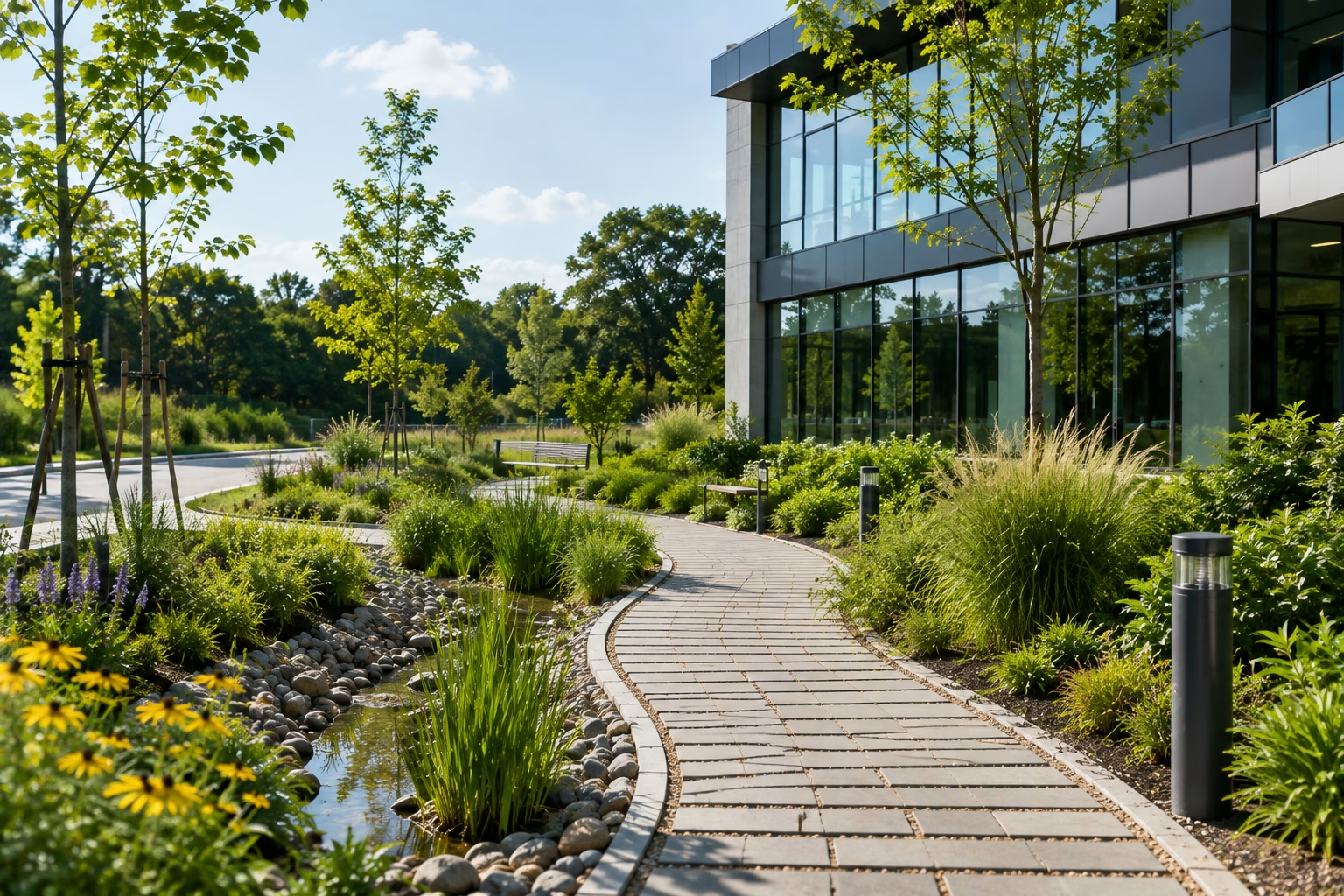
Sustainable Sites is about what happens on the ground the building sits on: what was there before, what survives construction, where the rainwater goes, how hot the surfaces get, and what the lighting does to the sky at night.
Do not confuse it with Location and Transportation, which is about where the site is — its connectivity, density and transport. Sustainable Sites is about the site itself. Two categories, one plot of land, different questions. See Location and Transportation.
Eight sub-topics
| Site assessment | Special-status vegetation, healthy habitat, invasive species to be identified |
| Construction activity pollution prevention | Erosion and sedimentation control, airborne dust |
| Habitat conservation and restoration | Restoration or preservation, native and adaptive vegetation, disturbed or compacted soils, bird-friendly glass |
| Exterior lighting | Light trespass and uplight, the night sky, nocturnal animals and migrating birds |
| Heat island reduction | Vegetated roofs, solar reflectance, roof and non-roof strategies, tree equity, parking undercover |
| Rainwater management | Historical rainfall, natural hydrology, runoff, low-impact development, harvesting and reuse |
| Extreme climate change events | Drought, heat, flooding, hail, hurricanes, sea level rise, tsunami, wildfire, winter storms |
| Accessible quality open space | Barrier-free access, social equity, quality of services, vegetated space, biophilia |
Notice the last two. Extreme climate events and accessible open space are not what most people picture when they hear “sustainable sites”, and they are two of the eight lines the exam works from.
The prerequisite
Minimize Site Disturbance asks for two things joined by and: a site assessment, and an erosion and sedimentation control plan. It also requires that special-status vegetation be conserved in full.
That “and” matters. A project with a thorough assessment and no control plan has not met the prerequisite, and a project that has met it has still earned nothing — prerequisites carry no points.
The six credits
| Credit | Points | What it rewards |
| Rainwater Management | 3 | Managing runoff to a percentile of local rainfall. Reuse can add, but the credit still caps at 3 |
| Biodiverse Habitat | 2 | Preserving greenfield and restoring disturbed land, plus bird-friendly glazing |
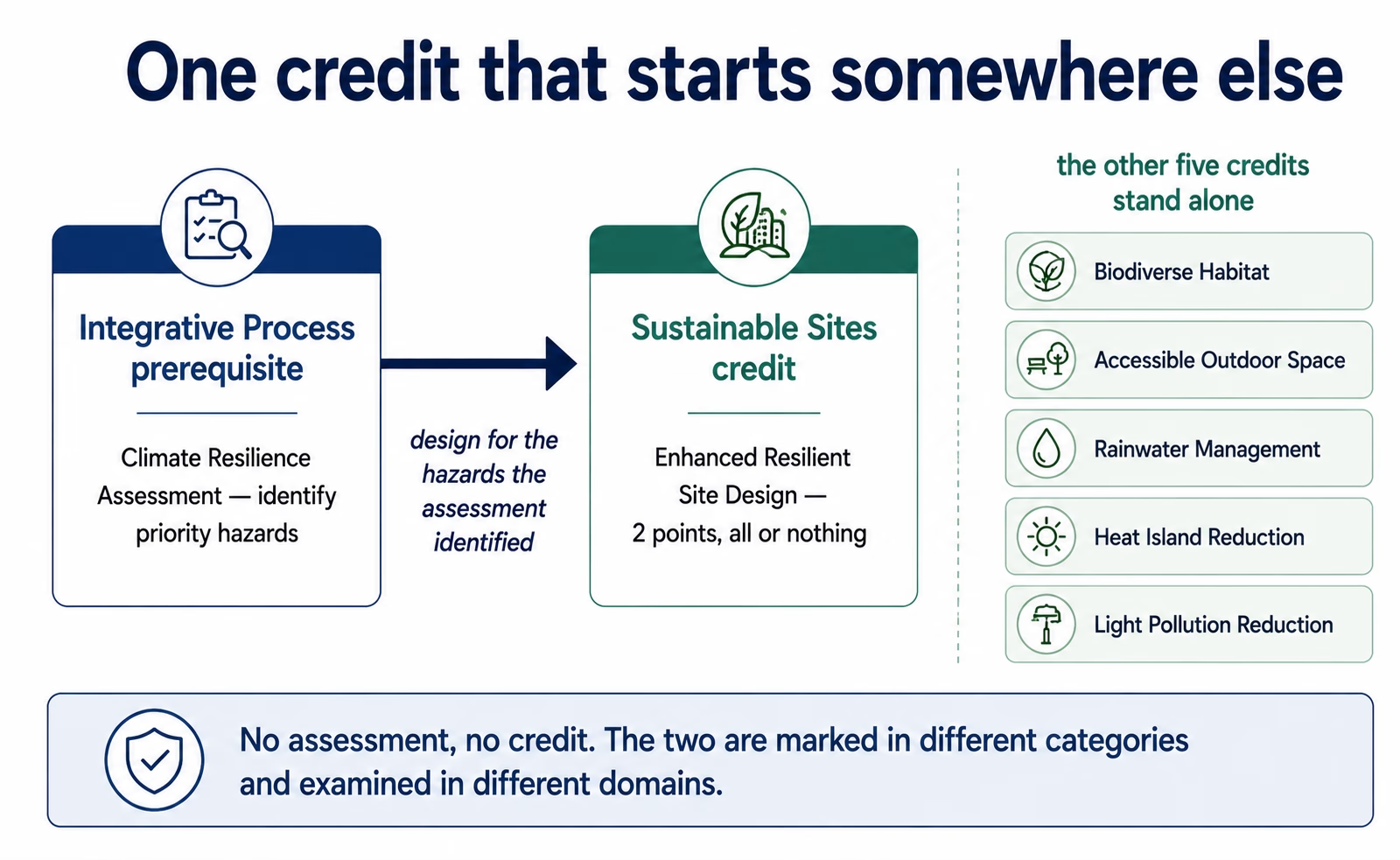
| Enhanced Resilient Site Design | 2 | All or nothing. Design for the priority hazards identified elsewhere — see below |
| Heat Island Reduction | 2 | Reflective and shaded surfaces, roof and non-roof |
| Accessible Outdoor Space | 1 | A proportion of the site as outdoor space, and a proportion of that vegetated |
| Light Pollution Reduction | 1 | Uplight, light trespass and sign luminance, by lighting zone |
| Total | 11 |
Point allocations as taught in our LEED AP BD+C v5 course material. Confirm against the LEED v5 BD+C Rating System before relying on them for a live project.
The dependency that catches people
Enhanced Resilient Site Design is scored against hazards a project identified under an Integrative Process prerequisite. The Climate Resilience Assessment requires a project to assess current and future hazards and identify priority hazards to design for. This credit then asks the site design to address them.
Three consequences, and each is a question waiting to be written:
1.The credit cannot be retrofitted. A project that treated the assessment as paperwork has nothing to design against.
2.It is all or nothing. Two points or none — there is no partial credit for addressing one hazard well.
3.It is examined in two domains. The assessment sits in Integrative Process, the credit in Sustainable Sites. A scenario can approach it from either side.
It is a good illustration of why the AP exam is not a vocabulary test. See Integrative Process, Planning and Assessments.
Where candidates lose marks
1.Multiplying instead of dividing in heat island. Getting the heat-island equation wrong. The calculation uses a weighted-area approach: apply the prescribed weighting factors to the applicable nonroof, high-reflectance roof and vegetated-roof areas, then compare the weighted result with the total applicable pavement and roof area. Each surface may only be counted once. umber that follows is wrong while looking plausible. If you do one calculation drill in this domain, do this one.
2.Missing that rainwater caps. Reuse can add to what a project achieves, and the credit still pays no more than 3. Where a credit’s routes can sum past its ceiling, the ceiling is what it pays.
3.Reading “and” as “or” in open space. The accessible outdoor space credit stacks requirements: a proportion of the site as outdoor space, then a proportion of that space vegetated, and more besides. Satisfying one limb is not satisfying the credit — and the second percentage applies to the outdoor space, not to the whole site.
4.Treating light pollution as one threshold. It addresses uplight, light trespass and sign luminance, all of which must be satisfied, and the values depend on the lighting zone. “The project met the uplight limit” is not the credit.
5.Confusing Sustainable Sites with Location and Transportation. Sensitive land, wetlands and steep slopes sit in Location and Transportation, not here. Habitat restoration on the site sits here. The dividing line is whether the question is about choosing the site or about what happens on it.
A revision checklist for this domain
1.Name the prerequisite and both things it requires.
2.State all six credits and their points, and say which is all-or-nothing.
3.Explain which credit depends on an Integrative Process prerequisite, and what happens without it.
4.Set up the heat island calculation correctly, from memory.
5.Explain what caps in rainwater management, and what does not add beyond the cap.
6.List the stacked requirements in the outdoor space credit and say which percentage applies to which base.
7.Name the three things light pollution reduction addresses, and what varies them.
8.Say, for any site-related credit, whether it belongs to Sustainable Sites or Location and Transportation.
Then practise it
Work through Sustainable Sites practice questions against the clock, and see the questions candidates get wrong. The full cross-category picture is in LEED AP BD+C credit categories.
Frequently asked questions
How many questions on Sustainable Sites are in the LEED AP BD+C exam?
9 of the 85 scored questions, drawn from eight sub-topics.
How many points is Sustainable Sites in LEED v5 BD+C?
11 points, the same for New Construction and Core and Shell, as taught in our LEED AP BD+C v5 course material. Confirm against the LEED v5 BD+C Rating System before relying on it for a live project.
What is the difference between Sustainable Sites and Location and Transportation?
Location and Transportation is about where the site is: its connectivity, density and transport access, and constraints such as sensitive land, wetlands and steep slopes. Sustainable Sites is about the site itself: what survives construction, where the rainwater goes, how hot the surfaces get and what the lighting does at night.
Which Sustainable Sites credit depends on another category?
Enhanced Resilient Site Design. It asks the site design to address the priority hazards a project identified under the Climate Resilience Assessment, which is an Integrative Process prerequisite. A project that treated that assessment as paperwork has nothing to design against, and the credit is all or nothing.
What is the largest credit in Sustainable Sites?
Rainwater Management, at 3 points as taught in our LEED AP BD+C v5 course material. It rewards managing runoff to a percentile of local rainfall, and reuse can contribute, but the credit still caps at 3. Confirm point values against the LEED v5 BD+C Rating System.
What is the Sustainable Sites prerequisite?
Minimize Site Disturbance, which requires a site assessment and an erosion and sedimentation control plan, both of them, together with full conservation of special-status vegetation.
What are the traps in Sustainable Sites?
Setting up the heat island calculation the wrong way round, missing that rainwater management caps at 3 points, reading the stacked requirements in the outdoor space credit as alternatives, and confusing this category with Location and Transportation.
Getting the site credits right
3FOLD TRAINING has prepared professionals for certification exams since 2008, across more than 100 countries. Our LEED AP BD+C training works through the calculations in this domain rather than describing them, which is the difference that shows up under time pressure. No course is required to sit or pass the exam, ours included. Ask through the course enquiry form.


Leave a reply