
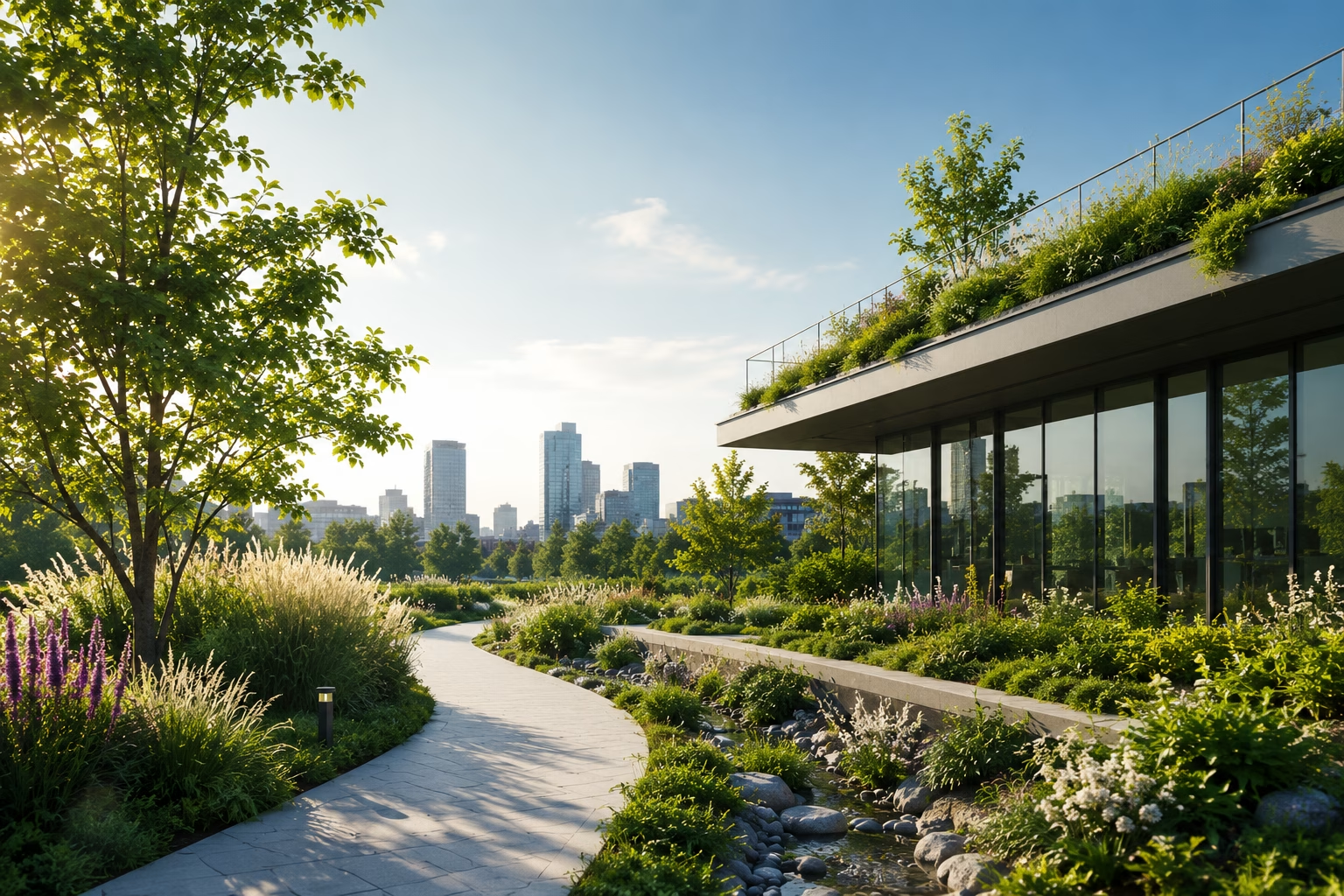
Sustainable Sites covers several distinct areas, including site assessment, construction activity pollution prevention, habitat, rainwater, outdoor space, lighting and heat-island reduction. Understanding the terminology and the purpose of each strategy is important for exam preparation.
It is a small domain with an unusually high concentration of precise terms, which makes it good value for revision time.
Understand the site before you change it
A site assessment examines a site’s environmental characteristics — topography, hydrology, soils, vegetation, climate and hazards — before design begins. Its job is to reveal what should be protected, what could be restored, and what risks the project needs to plan for. Done properly it prevents the expensive, damaging decisions that come from designing in ignorance of the ground.
Protecting soil during construction
Erosion is the removal of soil, sand, silt or gravel by wind or water. Erosion and sedimentation control is the set of practices that prevent or slow it and stop the eroded material — sediment — reaching waterways, where it smothers habitat and degrades water quality.
Soil compaction is the pressing together of soil particles, usually by construction traffic. It is worth understanding because it is invisible and permanent in practical terms: compacted soil drains badly, roots cannot penetrate it, and the organisms that make soil work are crushed out of it. Planting into compacted ground is why so many landscapes fail two years after handover.
Designing for the climate the site will face
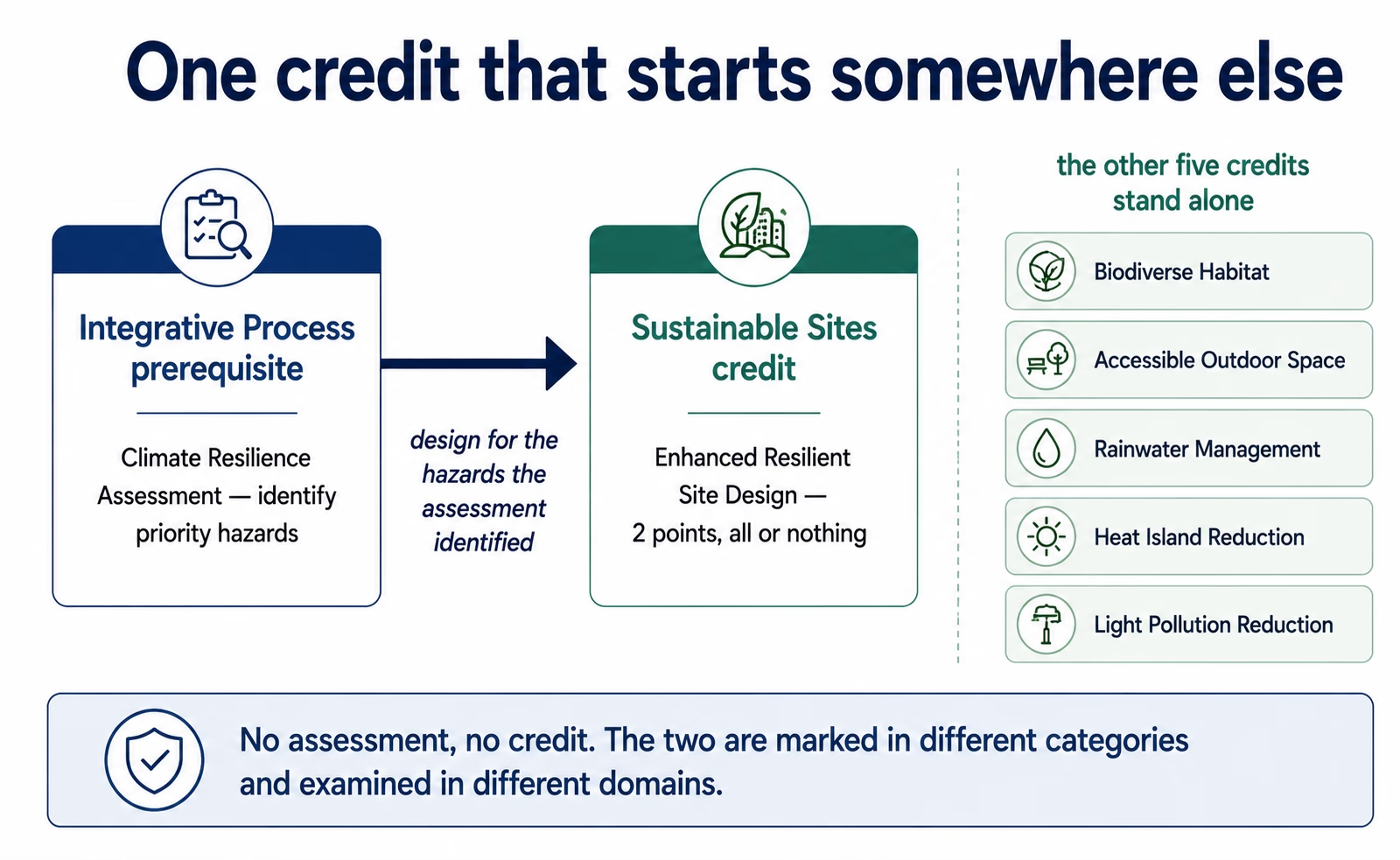
Climate hazards are the events and conditions that threaten a site — drought, extreme heat, flooding, wildfire, storms. Resilience is the site’s capacity to prevent, withstand, respond to and recover from them. Note that four-part definition; it is more than “survives a flood”.
Adaptive design is the practical response: shade, robust planting that tolerates extremes, and rainwater management that copes with more intense rainfall than the historic record suggests.
Heat and light
The urban heat island
An urban heat island is a developed area that is significantly warmer than nearby rural land, caused by dark, hard surfaces absorbing solar radiation and releasing it as heat. It raises cooling demand, worsens air quality and, in hot climates, kills people during heatwaves.
Solar Reflectance Index (SRI) is a measure of a surface’s ability to stay cool in the sun. Higher SRI means cooler — the surface reflects more solar radiation and releases absorbed heat more readily. That direction is the single most commonly reversed fact in this domain, so fix it now: high SRI, cool surface.
A green roof (or vegetated roof) incorporates vegetation and a growing medium on a rooftop. Depending on its design, it can help reduce heat-island effects, retain or manage rainfall, reduce roof temperatures and provide habitat or ecological benefits.
Tree equity is the newer idea, and it is examinable under LEED v5: canopy cover is not distributed evenly, and the neighbourhoods with the least shade are typically those least able to cope without it. Heat-island reduction is a public health measure, and who receives it matters.
Light pollution and bird-friendly design
Light pollution is excessive or misdirected outdoor lighting affecting people, wildlife and the night sky. The governing principle is easy to remember and easy to apply: the right amount of light, in the right place, at the right time — shielded so it goes downward, and controlled so it is not on when nobody needs it.
Warm light has an amber hue; cool light a bluish-white glow. Warmer, shielded light causes less disruption to wildlife and to human sleep, so warmer is the preferred answer.
Bird-friendly glass is glazing made visible to birds through patterns or fritting so they do not fly into it. Glass is one of the largest human causes of bird deaths, and the fix is a specification decision rather than an expensive technology.
Rainwater management
Rainwater management means capturing and retaining rainfall on site rather than channelling it away as fast as possible. The aim is to mimic the site’s natural hydrology — roughly what the ground did with rain before anything was built on it.
| Surface type | What it does | Examples |
| Impervious | Blocks water from soaking in, so it runs off | Asphalt, concrete, conventional roofs |
| Pervious | Lets water seep through into the ground | Permeable paving, gravel, vegetation |
Rainwater runoff is the excess rain that flows across the surface instead of soaking in. It causes flooding downstream, carries pollutants into waterways, and overwhelms drainage systems designed for a gentler climate. Green infrastructure is the answer LEED favours: slow the water, spread it out, and soak it in.
Nature and habitat
Accessible open space is outdoor space with features that make it genuinely usable by people of all abilities — not a lawn nobody can reach. A biophilic space integrates natural elements to connect people with nature, which supports health, comfort, focus and community.
On planting, three terms that questions like to put side by side:
| Term | Meaning | LEED’s view |
| Native plants | Plant species that occur naturally in a particular region or ecosystem. | Preferred |
| Adapted plants | Plant species that are not necessarily native but are suited to the local climate and site conditions. | Acceptable |
| Invasive species | Non-native species that can spread and cause ecological or environmental harm. | Avoid |
Habitat is the environment that provides the conditions and resources organisms need to survive and reproduce. Biodiversity refers to the variety and variability of living organisms, including diversity within species, between species and of ecosystems.
Key terms to memorise
| Term | Definition the exam expects |
| Site assessment | Evaluating a site’s environmental characteristics and human impacts to inform planning and design decisions |
| Erosion | The removal of soil, sand, silt or gravel by wind or water |
| Erosion and sedimentation control | Practices that prevent or minimize soil erosion and reduce sediment movement from construction sites into surrounding areas and waterways |
| Soil compaction | The pressing together of soil particles, which can reduce pore space, infiltration and drainage and restrict root growth |
| Resilience | Capacity to prevent, withstand, respond to and recover from hazards |
| Urban heat island | A developed area significantly warmer than nearby rural land |
| Solar Reflectance Index (SRI) | A measure indicating how hot a surface is likely to become in the sun, based on solar reflectance and thermal emittance. Higher SRI generally indicates a cooler surface |
| Green (vegetated) roof | A vegetative layer on a roof that cools, manages rain and adds habitat |
| Tree equity | An approach that considers how tree canopy and the benefits provided by trees are distributed among communities. LEED v5 includes a Tree Equity Score pathway within heat-island reduction |
| Light pollution | Excessive or misdirected outdoor light affecting people, wildlife and the night sky |
| Bird-friendly glass | Glazing patterned or fritted so birds can see it and avoid collision |
| Rainwater management | Capturing and retaining rainfall on site to reduce runoff impacts |
| Impervious surface | Ground that blocks water from soaking in |
| Pervious surface | Ground that lets water seep through |
| Native plants | Species occurring naturally in the local area |
| Adapted plants | Plant species that are suited to the local climate and site conditions; they may be native or non-native |
| Invasive species | Non-natives that spread aggressively and harm ecosystems |
| Biodiversity | The variety and variability of living organisms, including diversity within species, between species and of ecosystems |
Synergies to recognise
- Trees. Trees can provide multiple site benefits, including shade, reduced heat-island effects, rainfall interception, habitat and improved outdoor environmental quality.
- Green infrastructure. Manages rainwater, reduces the heat island and recharges groundwater from a single set of interventions.
- Reflective and vegetated roofs and Energy and Atmosphere. Cutting roof surface temperature cuts cooling load as well as the heat island.
- Native planting and Water Efficiency. The same planting decision reduces irrigation demand and supports habitat.
- Open space and Indoor Environmental Quality. Biophilic design does not stop at the façade — views out and access to nature are the same argument from either side of the glass.
Where candidates lose marks
- Reversing SRI. High SRI is cooler. This is the classic error in the domain.
- Confusing pervious with impervious. Pervious lets water through. Impervious blocks it. Read the option twice.
- Treating adapted plants as equivalent to native. Native is preferred; adapted is acceptable; invasive is avoided.
- Choosing restoration over conservation. Conserving existing habitat comes first.
- Thinking light pollution means “too much light”. It also means misdirected light — the right amount pointed the wrong way is still pollution.
- Assuming cool white light is the sustainable choice. Warmer, shielded light is preferred.
- Overlooking soil compaction. It is a construction-phase decision with permanent consequences.
Revision checklist
You are ready on this domain when you can, without looking:
1.Say what a site assessment examines and why it comes before design.
2.Define erosion, sedimentation control and soil compaction.
3.Explain what resilience means in the context of a building or site and how it relates to preparing for, withstanding, adapting to and recovering from hazards and disruptions.
4.Explain what causes an urban heat island and name three ways to reduce it.
5.State what SRI measures and which direction is cooler, without hesitating.
6.Name three benefits of a green roof.
7.Explain tree equity in one sentence.
8.State the light-pollution principle — right amount, right place, right time — and say whether warm or cool light is preferred.
9.Distinguish pervious from impervious and give two examples of each.
10.Explain what rainwater management is trying to imitate.
11.Rank native, adapted and invasive plants by LEED’s preference.
12.State whether conservation or restoration comes first.
Test yourself
Reading is not revision. Work through our Sustainable Sites practice questions, then sit the 50-question mock exam under time.
Frequently asked questions
How many Sustainable Sites questions are on the LEED Green Associate exam?
8 of the 85 scored questions.
Does a higher SRI mean a hotter or a cooler surface?
Cooler. A higher Solar Reflectance Index means the surface reflects more solar radiation and releases absorbed heat more readily.
What is the difference between a pervious and an impervious surface?
A pervious surface lets water seep through into the ground, such as permeable paving or gravel. An impervious surface blocks it, such as asphalt or a conventional roof, so the water runs off.
Are native or adapted plants preferred under LEED?
Native plants are preferred because they occur naturally in the local area. Adapted plants are acceptable where they thrive with minimal irrigation. Invasive species are avoided.
Learning this properly
3FOLD TRAINING teaches site assessment, heat, water, light and habitat as a full module in LEED Green Associate training, written to LEED v5. Ask us through the course enquiry form.




Leave a reply